
The 150% Principle: Why Leaders Must Carry More Than Half the Responsibility
Why should the one with more rank carry more responsibility? The principle that repairs power imbalances.

- What ‘taking responsibility’ really means for anyone with more rank
- Why leaders are the worst judges of their own impact
- The difference between intent and impact — and why it matters
- Real coaching examples: the pausing leader and the “ideas person” CEO
- AGALA: a five-step framework for repairing ruptures
- Why ‘two consenting adults’ ignores real power gaps
- How this principle applies beyond the workplace, including parenting
Dr. Vinay and Dr. Paul unpack the ‘150% Principle’: in any relationship with a power differential — boss/employee, teacher/student, parent/child — the person with more rank doesn't just share equal responsibility for the relationship, they carry more of it. Drawing on coaching case studies (a leader whose ponderous pauses bred anxious speculation, a CEO whose brainstorming was mistaken for orders), they explore why those in power are structurally the worst judges of their own impact, and why asking for feedback — not just accepting it — is a discipline of leadership, not an optional nicety. They introduce AGALA, a five-step framework for repairing ruptures (Acknowledge, name the Gap between intent and impact, Apologise, share the Learning, Ask what's missing), and close by extending the principle beyond the boardroom — to parenting, and to why "two consenting adults" is a myth when a real power gap exists between them.

01Welcome and Introduction to the 150% Principle
00:00:00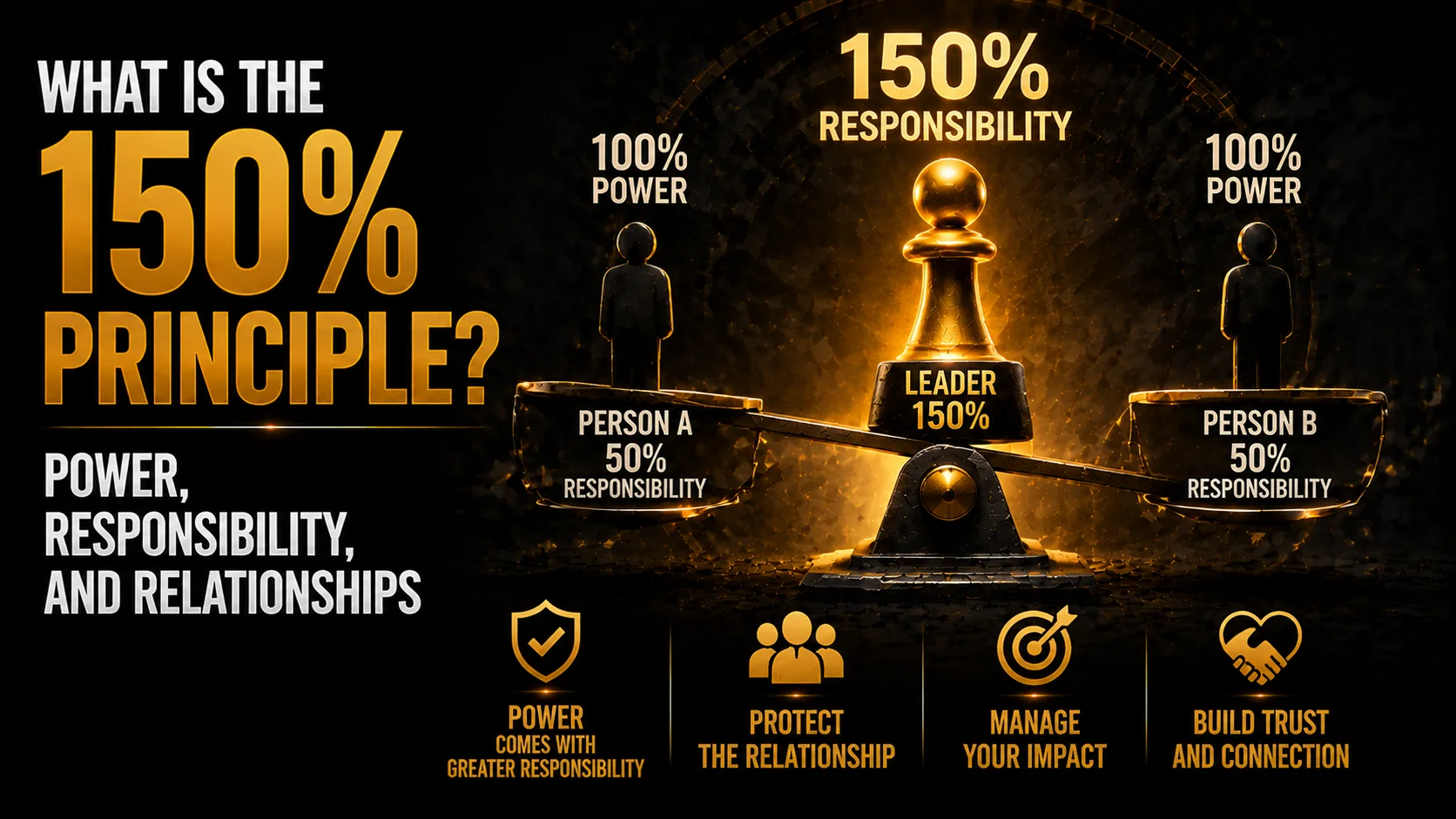
02What Is the 150% Principle? Power, Responsibility, and Relationships
00:00:16
03Origins and Rationale: Where the Principle Comes From
00:01:50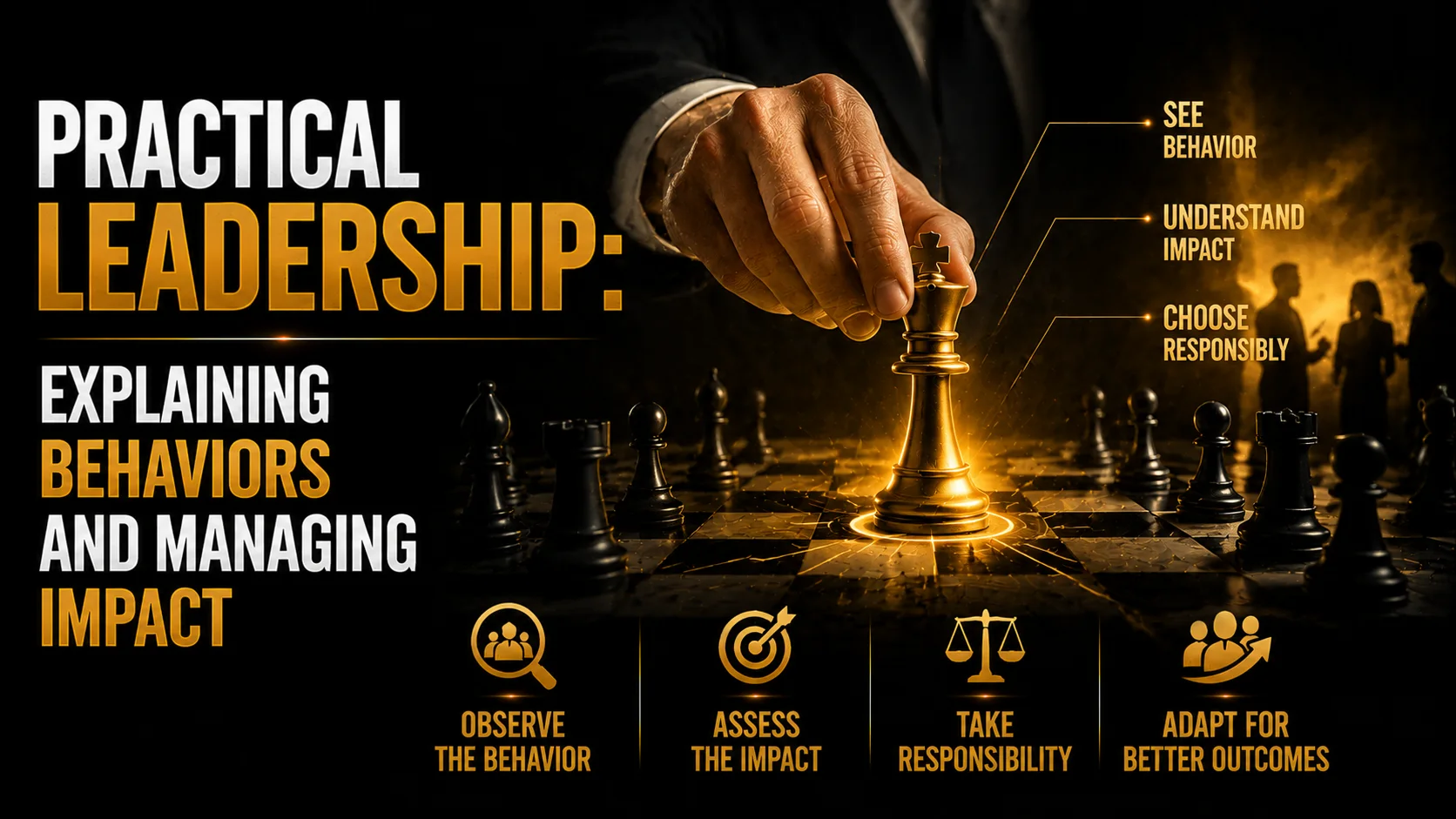
04Practical Leadership: Explaining Behaviors and Managing Impact
00:04:06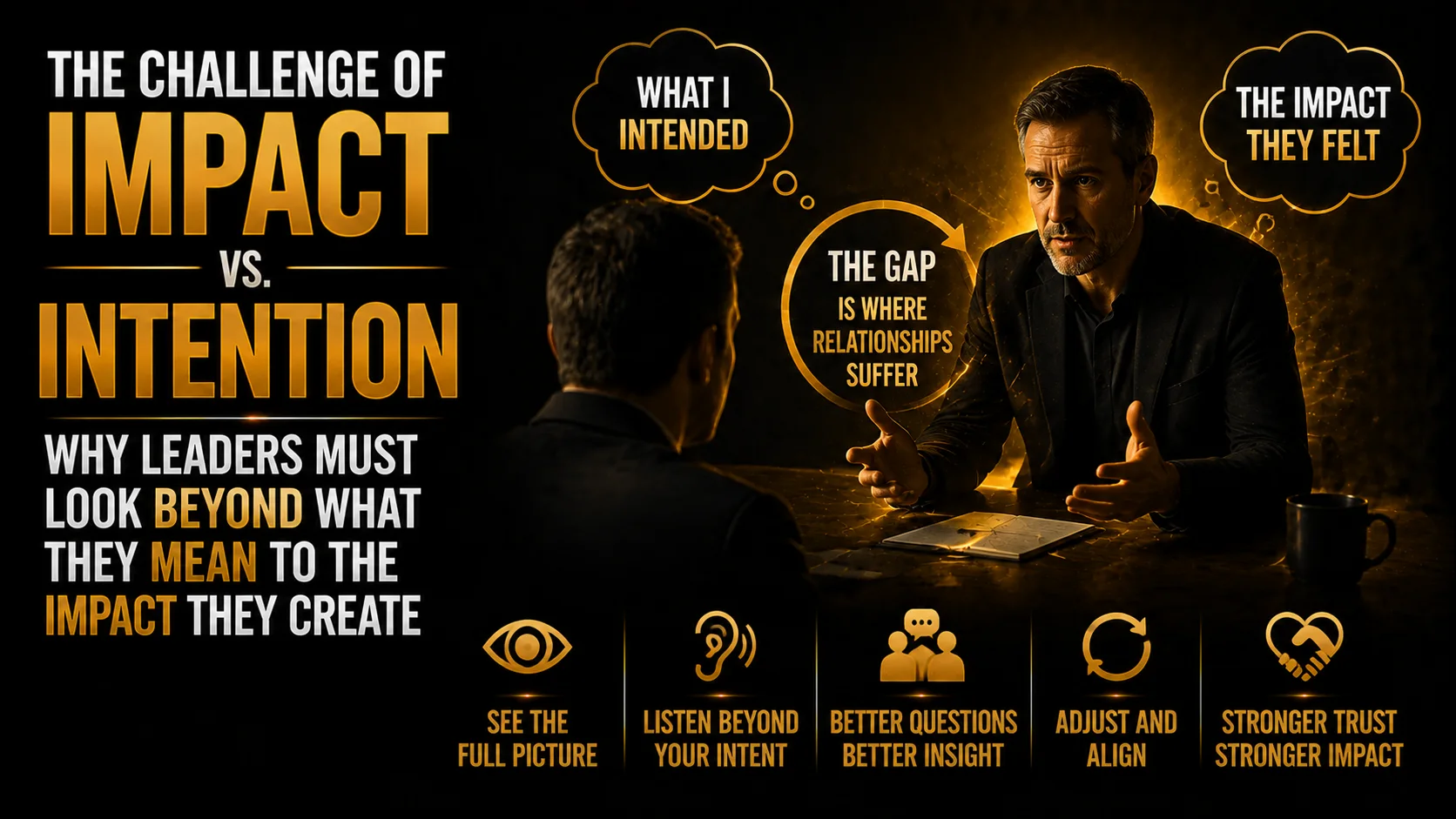
05The Challenge of Impact vs. Intention for Leaders
00:08:03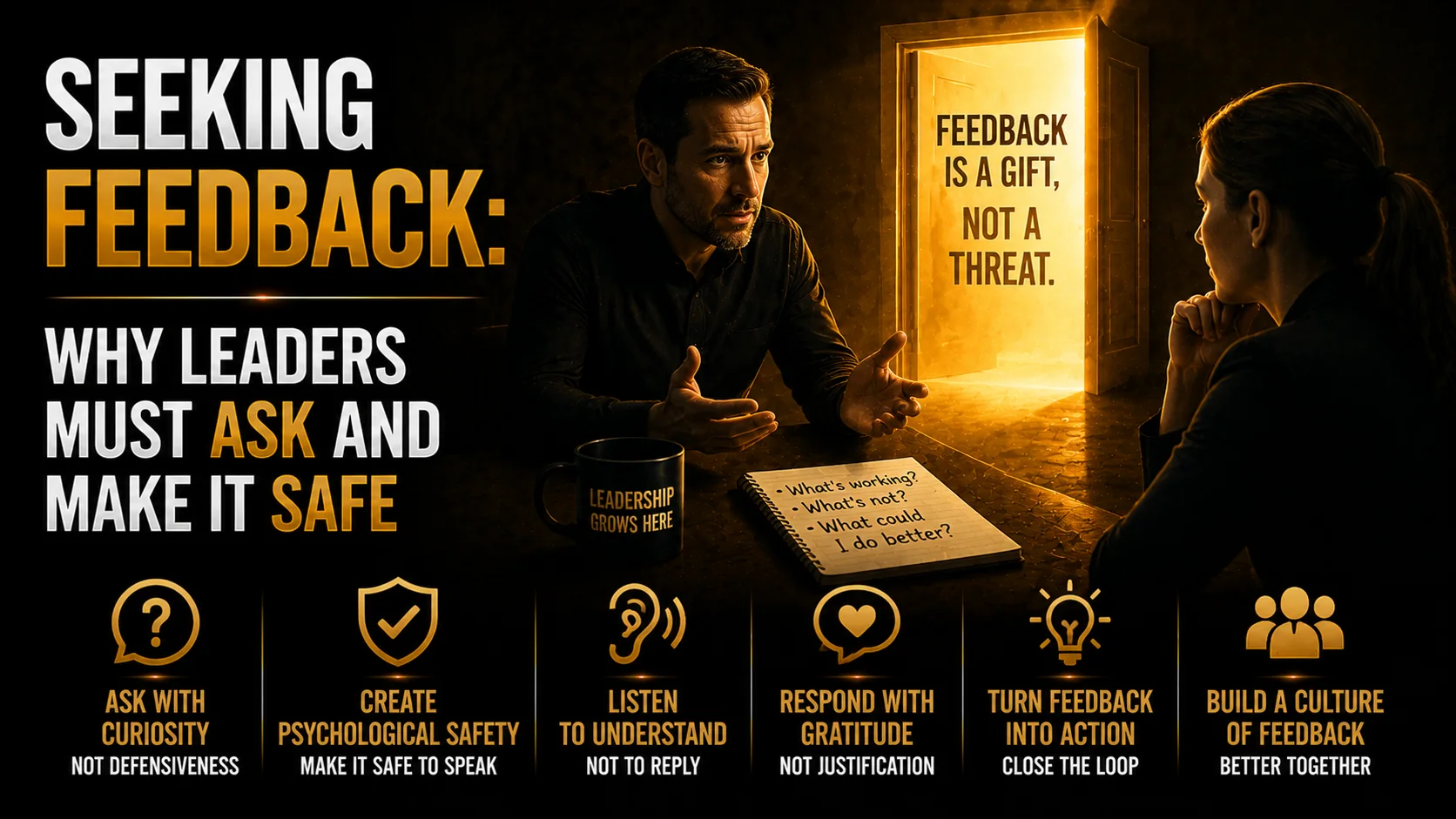
06Seeking Feedback: Why Leaders Must Ask and Make It Safe
00:10:23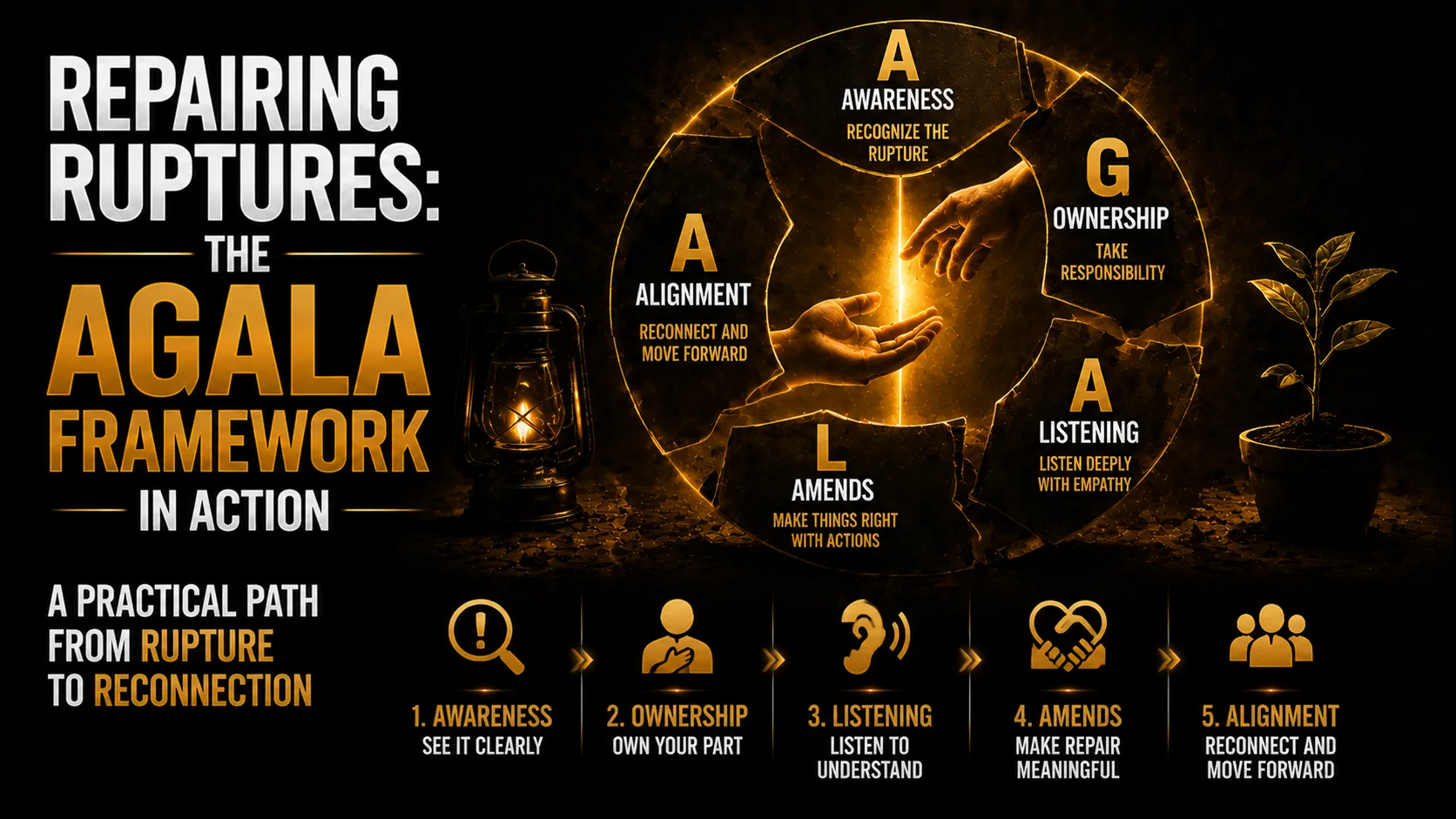
07Repairing Ruptures: The AGALA Framework in Action
00:21:01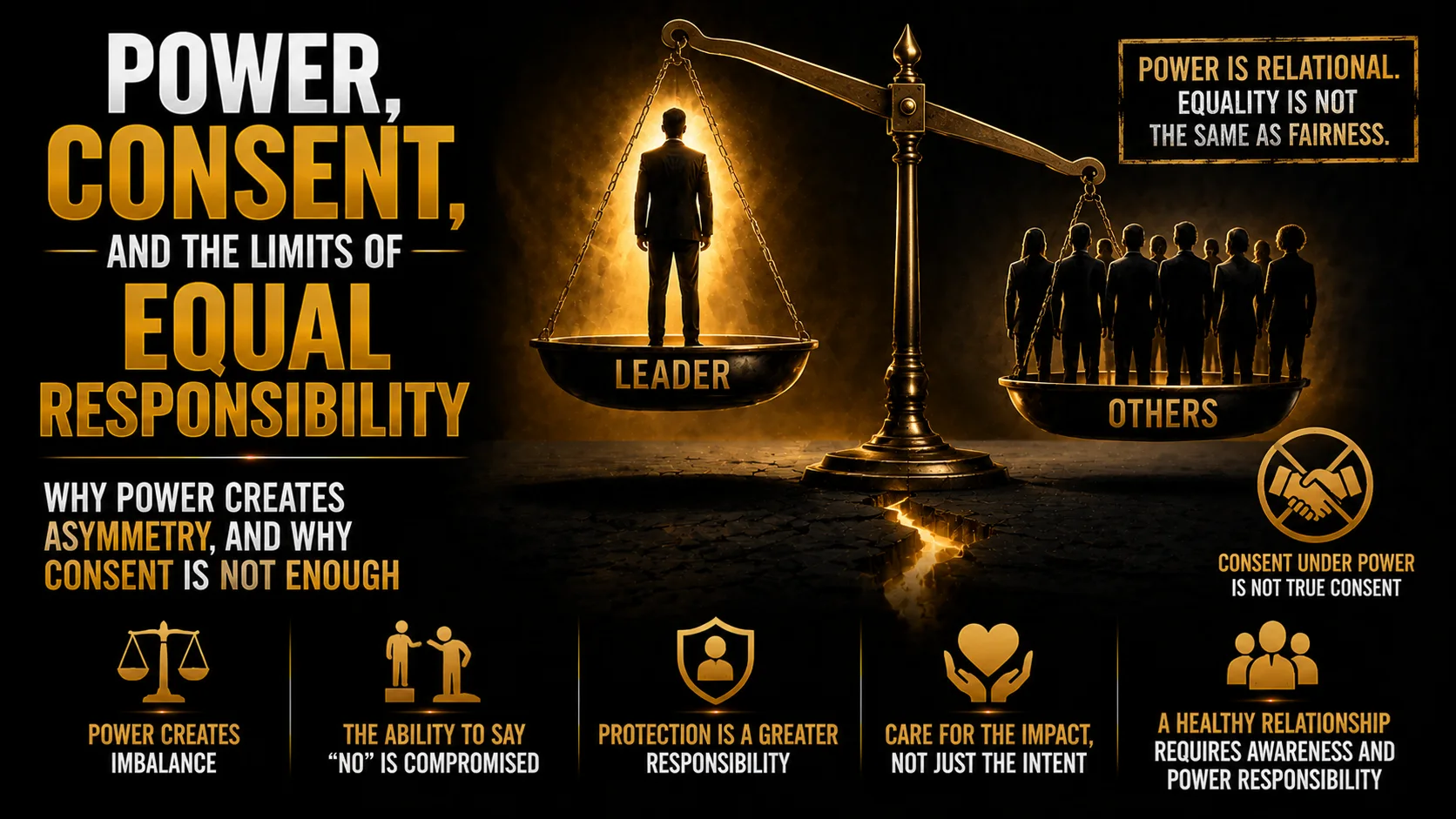
08Power, Consent, and the Limits of Equal Responsibility
00:30:00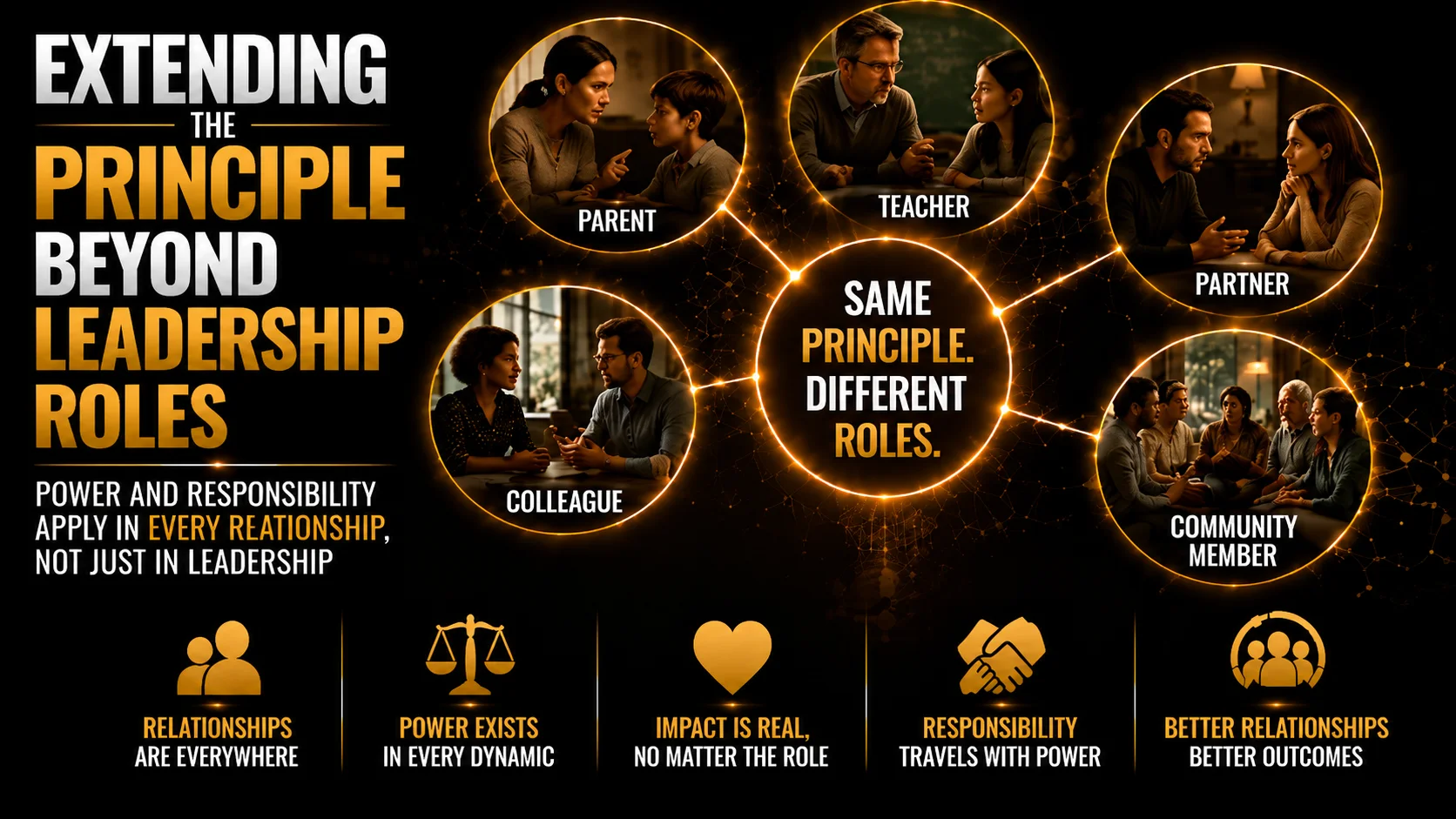
09Extending the Principle Beyond Leadership Roles
00:33:35Auto-generated transcript (speech-to-text). Speaker labels not included; minor transcription errors may be present.
So welcome everybody to our next podcast on Power. This time we're going to be talking about something called a hundred and fifty percent principle. So Paul maybe you can introduce the topic today. Yeah, thank you, Vinay. Well this is a principle which can be well frankly very difficult to put in place but like a life changer, like a game changer for the relationships where we have a power difference or a power differential between us and the other person.
It basically says that if you are the person that has more rank than the other person, so for instance you're the teacher and they're the student, you're the boss, you're the manager, they're the reportee, you're the parent and the other is the child. Then guess what? You take one hundred and fifty percent of the responsibility for the ongoing health and clarity of that relationship, one hundred and fifty percent. That's what works in practice. That's an audacious claim, Vinay.
Like it's, it runs directly across what we would normally say in that is everyone shares equal responsibility for the health of the relationship and sure that's right but it completely overlooks the effective power on relationships and the hundred and fifty percent rule actually acknowledges it. So where did you hear about this, Vinay? We've been talking and teaching this for years. What's it come from? That's right.
Well you started with the punch line which is good. Well I first landed from Cidabasto who wrote a book called Living in the Power Zone and she was the one that I first recognized as well. This is a woman who's really taken this topic and digested it and written a book about it and then of course Julie Diamond we also both know another major author and has talked about this topic. I think other authors on power have suggested this and in a sense people generally kind of in some way understand this or that it's part of the discourse even in terms of movie stars and the seduction of women or something. People in power, this is a very common thing.
This is putting a numerical value on it because which is useful because people do as you say talk about taking hundred percent responsibility which is of course a principle of maturity. It's a principle of we could say adulthood, it's a principle of relationships to make them work. We need to take a hundred percent responsibility for actions but this principle says as you point out the one with the power differential whether that be the boss or the teacher, any kind of rank role, it holds greater responsibility so it's more than just I take a hundred percent of responsibility. So I guess the question is what does it mean to take a hundred and fifty percent of the responsibility? Yeah that's it.
What is it actually mean in practice? If you are a leader then you have more responsibility and it is part of the territory of occupying roles with more rank. You have more access to more power, you have more responsibility. So what does it mean exactly? So here's a couple of things that means to me.
I was working with a leader not so long ago when we were discussing this and I noticed this particular leader was doing something with their team and this particular leader for instance took long pauses after people speaking and people were sort of wondering what it is that they were meaning and they would pause and go like that and then they'd say something and then there'd be this ponderous moment and what I mentioned to this leader is hey you've got to explain your behavior. You've got a responsibility to bring an interpretation about what you're how you're behaving and how others might interpret it because they're watching you more carefully than they're watching each other and they're deriving lots of stories out of your long ponderous gaps and some of them are going into doubt about whether they've said something silly or worthy or maybe super important and actually in most of the cases after speaking to you and I was speaking to the leader not of that's true but so you've got to explain more fully the intent you have and the behavior you have. Don't leave it up for grabs. That's taking 150% of the responsibility. You've got to explain more about how you're behaving, why you're behaving and the way you have the intent behind what you're behaving because people are going to be building stories and narratives out of.
What do you think? Yeah that's right and it's interesting because usually if someone's in a position of power they feel like they have to explain themselves less. There's some privilege has to go with the role and why should I make it so why should I do all this work it's the job of the people listening to me to figure out what I want and I think I'm being clear and that's my style I like to pause so you know why should I have to adjust that so that that sort of works against this sort of 150% principle that we're talking about. Spot on yeah I really love it that you've named that because I was thinking when you said that about another CEO in this case I was coaching a little some time ago but not so far that I don't remember very clearly because she had a tendency to come up with all sorts of ideas and so when a problem came up in a meeting she'd go well we could do this we could do that the other and it wasn't until sometime into working with this team that she realized that when she started to speak about well we really could do this or we could do that the people were taking it as an instruction. I mean people were going out and doing all sorts of work when she would just mention in passing something about you know what it is because she was a great big ideas generator so she had a responsibility to say hey I should just let you know something I'm an ideas person and I think and I'm also an extravert so I'm thinking while I'm talking I generate options so that means that you're going to hear a lot of those and it doesn't mean that they're for action all the time and sometimes I forget to say that this is just me thinking out loud and so she had a responsibility to explain her personality typing and the way she likes to work in groups so because otherwise she was just being misinterpreted and she had a responsibility to step in and do that more than anybody else in the room more than anybody else in the room so that's you know that's what was really critical yeah yeah and I think this brings up something that's related very tightly to this 150% principle which is the the issue of impact because there's of course intention and you know generally people have good intentions into personally or in a work sense and they're certainly playing those good intentions the 150% principle though is paying attention to impact which is a difficult thing because you know if if most of us are confronted with something that we do you know that someone's upset about we'll jump to intention well I didn't intend to do that what I thought I was doing was this and when it comes to the rank the difference and it's shown of rank this issue of impact is particularly important because again part of the nature of a role like that with more power is that we're actually less aware of the impact we don't realize that these words we have or the ideas we generate in the case of the CEO we don't really get the impact that they have we're like well I'm just generating ideas because that's what I do and it's the responsibility of the other people to to you know take some of those ideas and understand them in context and the responsibility gets put back on the staff whereas what we're talking about is part of the responsibility of the role of power is to be aware of what exactly is the impact that I'm having to to pay attention to that to be concerned about that and to feel some responsibility that's a hundred and fifty percent thing oh well yes and that leads me to the next thing that I believe comes with this 150 percent principle of an A and that is this if you are going to own the increased responsibility that you have in to sustain a healthy productive relationship in power differential relationships then you must ask about your impact you must take the the issue of impact is so important and it leads me to this piece of advice leaders mask ask for feedback it is the responsibility of them and it is it it is an expression of the 150 percent principle because they will not see clearly their impact the more elevated you get the higher your rank compared to others the more challenging it is to see the impact you're having and although you don't know that that's what's going on you don't know that you're not reading impact as well therefore you must ask you must ask for feedback and that's one of the reasons why for so many leaders over the years I have a quick and insisted in coaching that they do a 360 feedback or that I interview people around them and create a report it's because they will not know their impact as well and they have a responsibility to determine their impact and to do that they must ask they must take the initiative to request feedback and in a business setting that's often done best by having some other third party get that feedback either through a 360 tool or through interviews and And so that's why I love what your point there about understanding impact.
And I want to let you know leaders will be less accurate at reading their input, reading their impact I should say, just by nature of being elevated. We're going to talk more about this when we talk about the power paradox in another episode. But it's a mind twisting mind bending experience to be elevated into positions of rank. And one of the difficulties that's created by that, the mind bending nature of being elevated is that it's extremely difficult to read our impact that way. That's right.
And I think people understand from their own experience that being in a position of less power generally feels less safe. You know, a job could be on the line or promotion or whatever that is. And so it's not always safe to give feedback. Sometimes when you do it's not always received so well, I've experienced that myself giving some feedback to a person with some power over me. And they did not receive it well.
I mean, they appeared to receive it well, but then subsequently there was quite a consequence for me. So, you know, people are reluctant to give feedback. And that's also the 150% principle is that leaders need to make it safe to give feedback that there's not some bad repercussions. That's why the 360 thing works because it's a third party and it's a procedure and it's a little more formal. But really, what we're talking about is going beyond that and that the leader is open and willing and proactive in seeking feedback, which is probably not that usual.
You know, so we're talking about something which in a way goes against the grain or seems I'm as counterintuitive when you're in a leadership position. Yes, it is a really humbling thing to say, hey, how am I being experienced by you? You know, like, how did you find me in that meeting? Or did you think I was too harsh or was I dodging the issue? Like, it is a humbling thing to ask someone about just how you performed.
Yeah. And let's face it, it doesn't really happen that much. It's not a thing that usually a boss is going to do. I mean, normally an employee would sort of fall over backwards if a boss asks them for that kind of feedback. Yes.
That kind of humility doesn't really usually go with the job or even the personality of a big leader. Yeah. No, it doesn't. But it is what we're yearning for, Vinay. We are yearning to find leaders who combine their rank with humility, you know, who combine their rank with the discipline of asking for feedback because they know they're going to be an unreliable reader of it.
And so they must take special effort. So there's like a cognitive component of this which is a principle, the 150% principle that we're explaining and we're explaining the rationale and we'll be talking a bit more about how to do it. The emotional side of it we could say is very difficult and requires not just this sort of virtue of humility, it actually requires someone to be willing to be kind of a little transparent. There's something usually also that doesn't go with the position of power and to have, you know, basically enact their role with a level of care and concern for others around them that is almost, it's almost personal in a way. Like, oh, how did that affect you?
You know, that's almost like a personal question and usually someone in a role of power doesn't expect to have to check that out. They expect people to adjust. I mean, I do a lot of work in China and a Chinese boss will often say, your feelings are of no relevance to me. I'm interested in your productivity, in your output, in your fulfilling your role duties, and in your feelings that really your problem, you know. So that's a very common attitude, a very tough attitude.
So to reverse that attitude in the leader, I think takes a great deal. I mean, what we're trying to do in this podcast and by having these kind of conversations and working with people in positions of power is influence them to help them to realize that they, in fact, need to shift quite significantly in their attitude and their behavior and in this sort of emotional softening as we might call it so that, you know, whatever care they have for their business is manifested in, I actually need to care about how I come across. Yes. Isn't that there's such a depth to what you've just said? Because in a way, on the surface, it's true what another person feels is not something I can control directly.
It's not exactly my problem. But with a leader who has rank and who has power flowing through their role, the perception of how they're being experienced is absolutely critical. You know, and I had a leader say to me, I'm not so long ago, Paul, you know, I'm interested in facts and that's not a fact, you know, your feelings and the fact. And I said, here's the fact, your perception is that you're intimidating. Here's the fact that you do not ask for input.
Here's the fact that they experience you as coming into conversations and giving a solution early and closing it down. The fact is they perceive you in that way and while they perceive you in that way, they're going to behave in a way which is entirely counter to how you need them to behave. So the fact of how you're being perceived is essentially, is an essential piece of knowledge for a leader. They must ask for feedback about how they're being perceived and experienced. Yeah, and it affects effectiveness.
That's right. You're effectiveness of the leader is related to, you know, way the nature of the relationship and that's certainly something that was revealed in the research that I did on power which is that many of these, and I was interviewing middle level managers not so much, you know, CEO or other executives, middle level managers, the kind of the sandwich in between, but nevertheless, they have power downwards and what all of them said to me, every single interviewer, and these were people with, you know, at least five years experience and sometimes 10 or 20 years experience. They all said, yes, I can direct people to do what I want and I have the power to do that. But in the end, it doesn't work because they, I have to get them on board basically. I have to have enough of a relationship or enough of a kind of relational conversation with them, enough interest in what they think and what they want or whether they're really willing to do what I ask and not just sort of wield my power to be able to push my way through because otherwise in the long time, long run, it just doesn't work.
So we're talking about effectiveness as well as a rationale for this 150% principle. Yes, the 150% principle works because it is effective. It is effective. It takes into account the lens of power that people are looking to the leader to read the mood. People are overly vigilant about interpreting the behavior of leaders.
So the 150% principle is simply effective. And what to do so is ineffective is absolutely ineffective. That's right. So hopefully we've established the importance of this principle and said a little bit about it. I guess the big question is once people are willing to consider this as being relevant or something that they might need to take on board, there's a question about how to actually do it.
And I think the way to do it is a little different in a way, in a power relationship than it is in an interpersonal relationship because of course with our loved ones, the people we're friends with, we need to be concerned about the impact that otherwise the friendship or intimacy is damaged. But there's a particular kind of way this needs to happen in a vertical relationship and maybe you can say a few things about that. Yeah, I would. I'd like to say something that might help practically with a leader who needs to take the initiative to repair. And this is such an important initiative and a practical expression of the 150% principle.
So when you sense, when you do sense that there is some sort of rupture or some sort of problem or maybe some static, there's unusual gaps or people are behaving around you differently than they usually are, then and you sense that something you've done has perhaps initiated that. Then here is the 150% principle in practice. This is the leader must step in and take the initiative to repair. So I use a particular an acronym, Agala, AGE-ALA, Agala. So it's a simple, Agala is a simple principle around which to guide the conversation around taking initiative to repair.
The first day starts for acknowledge, acknowledge that there are feelings on the other side that the pit will have changed, that they seem unusually quiet or that they're expressing distress in some way. So that's the passive aggressive. All right, all they've been passive aggressive. I notice you've said some things which are quietly critical of the approach we're taking here. Whatever it is, acknowledge that something's going on over there.
And then go to G, say, Agala, AGE is the gap. Just as you mentioned earlier, there is a gap, acknowledge that my intent has been X but it appears my impact has been Y. And that's a really, so we have to, that's an incredibly important, if you like, in extension of the acknowledgement. Notice that your intent has been good because it almost certainly has but your impact is different to that and that's an important dynamic to give words to. So there's the acknowledgement, there's the gap, then the next, Agala, and the next is make a simple apology.
Which is very difficult for bosses to do. Bosses don't usually feel like they've got to apologize to anyone. That's right. Again, that goes against the grain. humility which is not always sort of identified with that role and people want to feel like they shouldn't have to apologize.
What me apologised to an employee that seems outrageous so it should be the other way around. They're the one that's resisting or they're the ones that you know that responsibility usually gets put back onto the employee. So you know in this case for the boss to take that additional responsibility can seem like almost too much. Yeah. This is where we want to combine rank with humility.
This is where we have to combine rank with the discipline of taking more responsibility. And so it's because I'll come in because you know that is what we're talking about is that we're suggesting that the extra responsibility the responsibility of the role but the extra responsibility comes with power has a requirement and this requirement is not a requirement that's usually recognised but the requirement is this kind of humility and willingness to kind of check things out and to even recognise that wow you know I had a I had a bad impact here and that's to do that's on me. Yeah. Yes exactly and I mean and any leader many leaders will be aware of this backstory they may be holding like yeah this person is overly sensitive or this person has has actually been critical toward me before I even started or something and what I'd like to suggest because of the 150% principle is your task is to put that aside for the time being. Acknowledge the feelings speak to the gap which by the way speaks to your good intention but the gap between your intention impact then just say I'm sorry that I've had that impact.
So an acknowledgement it is it is something which we as followers long to hear our leaders say it's like a child you know like it's as a kid we really it is it is a paradigm shifting world view shaping experience to have our parent apologise to us because when we're young until they apologise we don't assume that it's then that's made the era we tend to assume it's us we tend to assume where wrong and it's safer to to take on that position because we've just got to keep adjusting because our parent is the source of life but when a parent says you know what I just did then was I had an impact where I've scared you because I raised my voice really abruptly I'm sorry about that. Not too many people have that experience of a parent saying that but you know we're pushing to an edge of advanced skill. Now Paul I'm just going to say there's a paper or something in the corner that's flicking around. Oh great. Yeah that's right that's sort of flapping for that.
Thank you. That's good. So the apology is the most challenging part and of course potentially the most powerful. So that's so we've got acknowledged gap apology. L is so what do you think we're learning?
So as a leader what am I learning here about us and about the way we are interacting and so this takes you more from the apology which is really a kind of a heartfelt thing even if just said briefly to being a little more cognitive. So what are we learning here? This is you stepping into your position of leadership around saying this is what I think we're learning here this is what I'm learning. That's the that's the L and the last A Agala the last A is ask is there anything else here that I've missed? Well that's an extension of the learning process and I mean yes yes.
I've heard of the learning organization you know that well-known book and the concept of an organization that's adaptive in the sense that it's always learning something new rather than always working in the same way. So it's about the responsibility of the leader to demonstrate learning in practice by adopting this position and asking these kind of questions and really setting the tone because if the leader is setting the tone of a learning organization or being a person willing to learn from experience then of course that's going to go all the way down. Yes it's it's going to be gout itself you know it's it's going to probably propagated. Agala is an audacious ambitious kind of practice but it is a terrific application of the 150% principle because it is a leader initiating repair initiating restoration reconciliation and Agala gives steps to do that. It's that it's the hand rail to hold while addressing topics which are difficult to talk about it's like you know it's I often say that when we're on you know a shaky ground like you're on a pair of ice skating you know you're on ice skating rink and you've got rings you've got your ice skates on this can be what it feels like to be in conversations which are unfamiliar and uncertain when you're expressing more humility or vulnerability than you might normally have we need a hand rail to hold to guide us and these templates help especially for difficult conversations Agala and you had mentioned to me before we started about the comment your son made about why do I have to be the bigger guy and you know I think that that's a very common question why do I have to be the bigger guy and you know if I have an argument with my wife I'm you know I'm gonna have that somewhere I'm gonna say that why do I have to be the one to you know pull myself out of this and be the bigger person why can't she apologize first so that happens in interpersonal relationships and I think this is even more so the case here is why do you have to be the bigger guy because I guess you are the bigger guy and yet it's difficult to step into that the responsibility that goes with this in the terms that we're talking about and we can see this again to go back to the public sphere and go back to some of the you know sexual problems that have happened with people it usually men in power you know they kind of there's often an assumption that for instance there's the term bandied about consenting adults well you know we're two consenting adults and you know she was she was up for it as much as I was and but what's missed by people in positions of power in these you know comedians or whoever they are what they miss is that being in a position of power the notion of two consenting adults is not really correct because the the person with the hundred and fifty percent power it's not just two consenting adults it's that there's a greater requirement to think about what's going on to address the situation to see the power differential to notice the impact you know if you've got more power and and you you suggest something then you know an employee or a student or whatever that role is it's more likely to act to acquiesce and it looks like two adults with equal responsibility but it's not that's what we're saying and I think that that's what a lot of people in power different kinds of power kind of miss and they don't realize in a way until it's too late well said well said they miss it until it's too late yes there is a disproportional responsibility to determine one's impact to ask for feedback to clarify the experience of the other if you have higher rank and and that goes right to the question of sexual relationships between people with big differential power in their roles and it's it's simply not enough to say the other person seem to say yes when there might be an unusual pressure upon them to do so in that context and far more exploration and inquiry needs to be made in the context of the process.
I guess this is part of what we're trying to do here is some sort of educational process for people who step into roles to greater power because in a way you know people are given a role of manager or they're promoted or something but as we've mentioned there's very little preparation for the power nature of the role there's very little education on what does this mean what do you need to do how can you feel this responsibility not just as a responsibility to guide and lead but a responsibility in these more relational terms that we're talking about so the lack of understanding this 150% principle I think is what gets a lot of people in trouble so hopefully you know as we introduce this as people become more interested people in positions of power become more interested in being increasingly skillful then there can be some kind of motivation to learn this before it's too late before the damage is done. Yes here here to that that's what we want to communicate in this particular podcast and in many ways it's a theme that will run through the 150 principle is a percent principle is a here's a great practical manifestation of it but really throughout all these podcasts we're making a call that leaders must acknowledge the impact of their power and that they must live a profoundly examined life to use that power well. Exactly and you know we can say this extends not just to leaders or CEOs or senior management it you know we're all in some role of power as as a parent or you know there's younger people around us or whatever the situation is I think most people have some opportunity to recognize where they have greater rank and even a be you know a racial issue someone who's got white skin and someone who's got dark skin often unfortunately there's a ranking that goes on and we can you know there's a part of the sensitivity training that goes on that some people are critical of and yet it is fundamentally not about wokeness or something like that it's just about awareness of the kinds of power that we have because that there's many different kinds of power and we're especially talking about organizational power but what we're talking about is also relevant in other situations so I want to broaden out the audience in a way that can take into account the issue of the 150% principle. Terrific. Thanks for name.
Well it's been really good to talk about this and and I'll see you next time. That's right okay. Okay mate see ya.