
The Real Sources of Power Hiding Inside Every Organization
Where power comes from at the organizational level, and what happens when people underuse or misuse it?
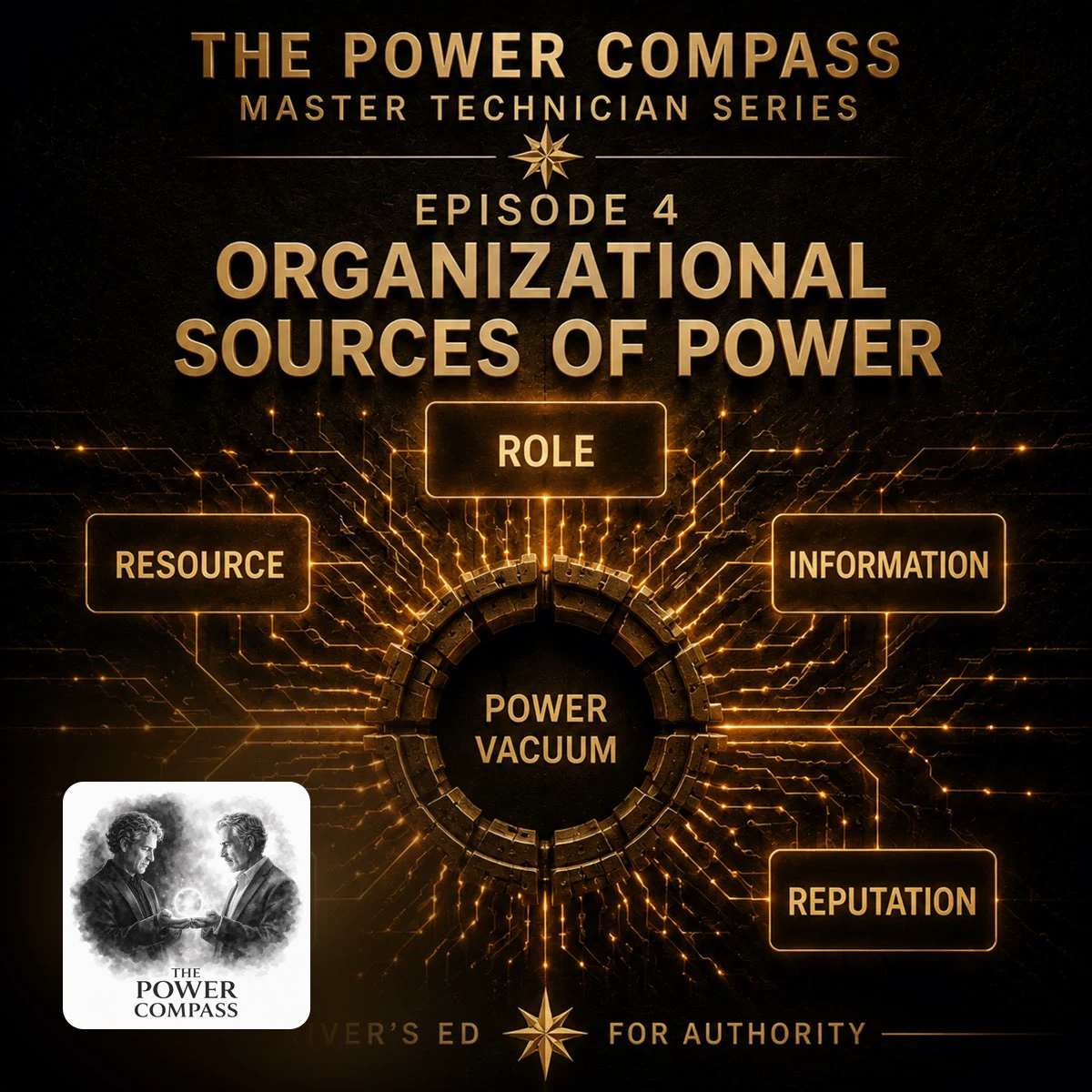
- Key sources of power: role, resource, information, network, reputation
- Why underusing your role power creates a dangerous vacuum
- Resource power: budgets, access, and the choices we forget we have
- Information power and the psychology of gossip
- Network power and the story of a 25,000-person walkout
- Reputation power and the rise of cancel culture
- Why role power without acknowledgment breeds resentment
Drs. Vinay and Paul map five organisational sources of power: role power (the built-in authority of a position, and the real danger of under-using it), resource power (budgets, access, and the things we control but forget we can withhold), information power, network/collective power, and reputation power. Through case studies of overwhelmed managers, permissive parents, and a real-world employee walkout, they argue that power isn't just misused by being heavy-handed — leaving a power vacuum by refusing to use legitimate authority causes just as much damage.

01Welcome and Episode Overview: Exploring Organizational Power
00:00:00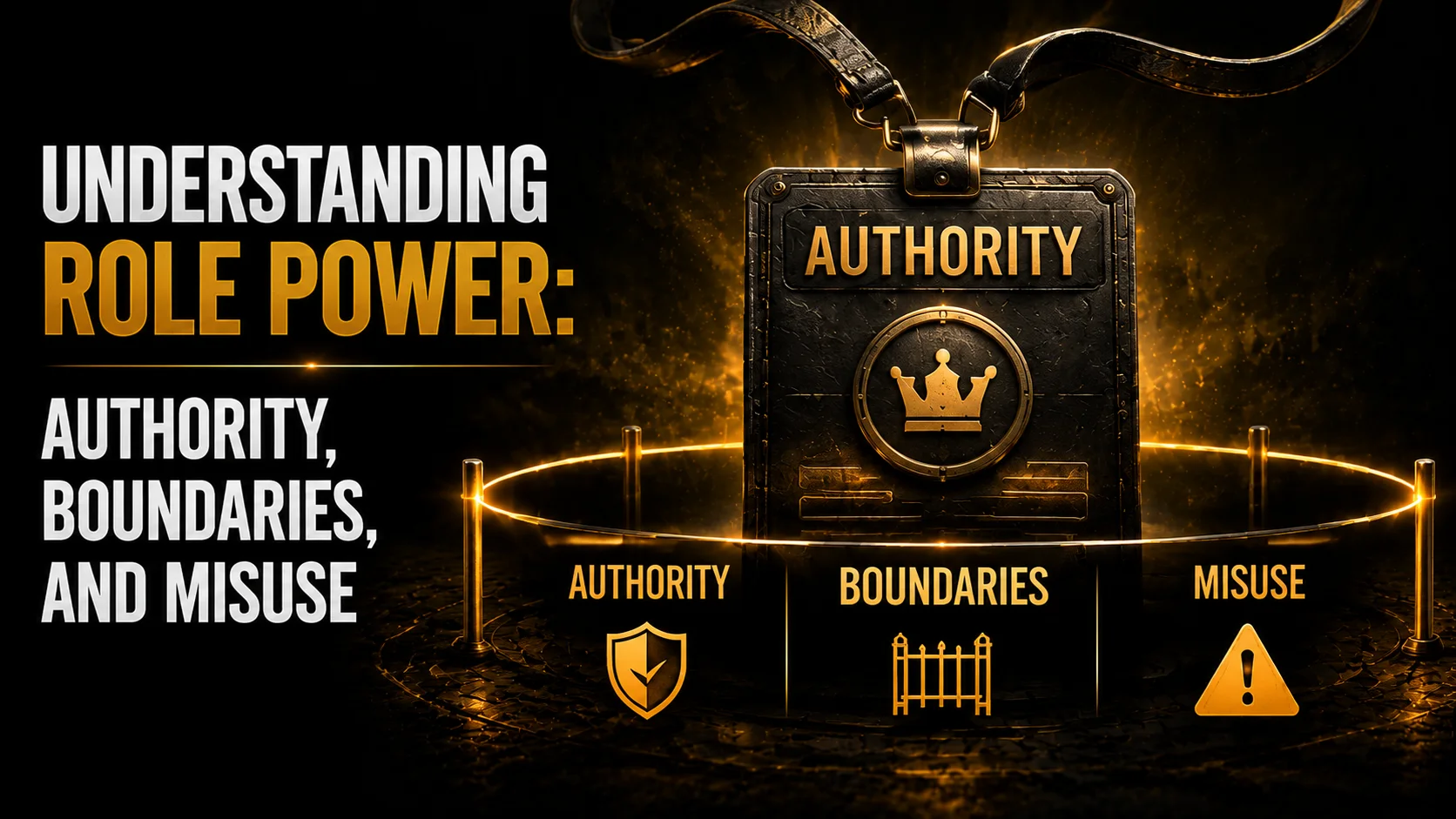
02Understanding Role Power: Authority, Boundaries, and Misuse
00:00:14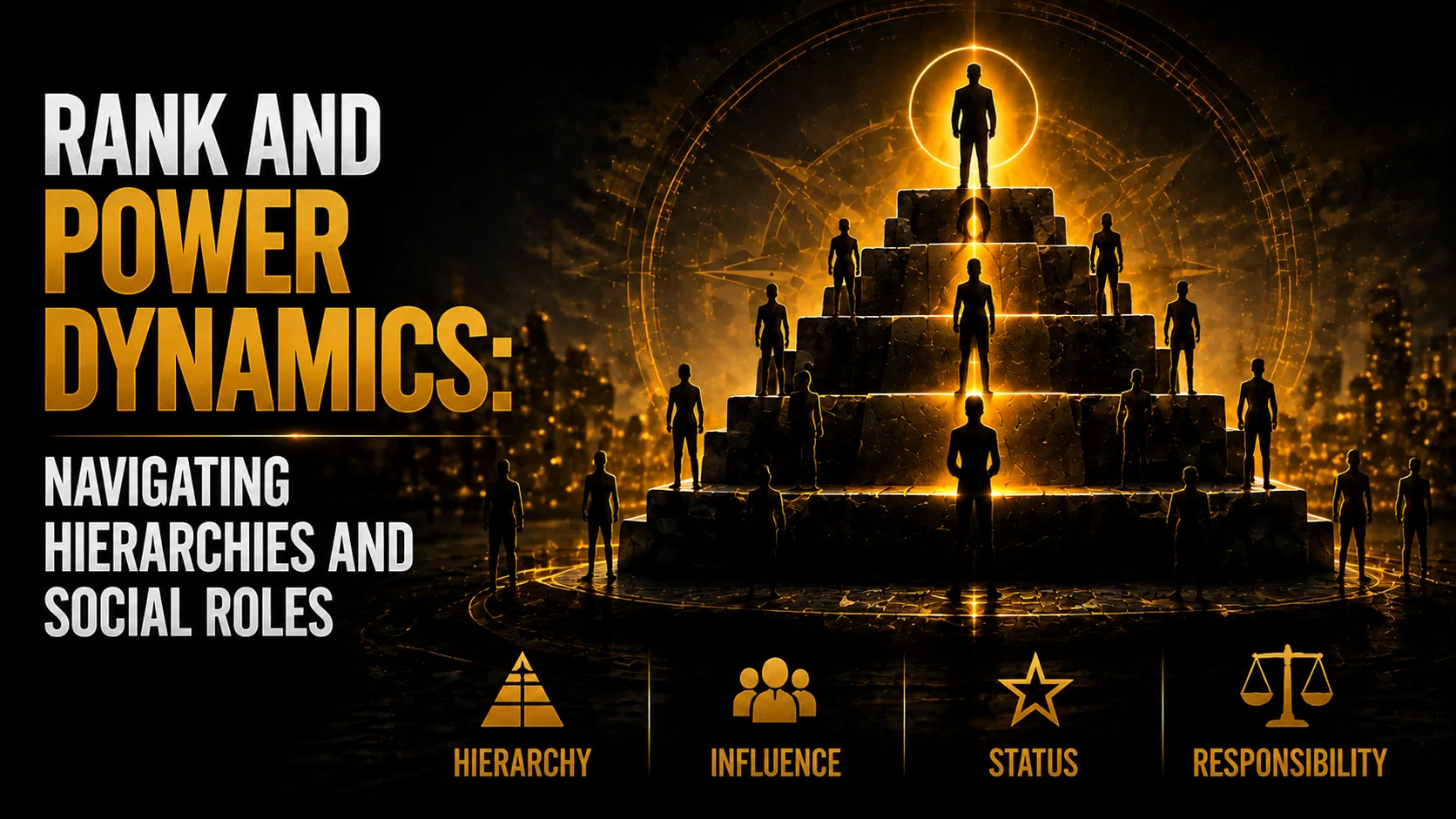
03Rank and Power Dynamics: Navigating Hierarchies and Social Roles
00:11:09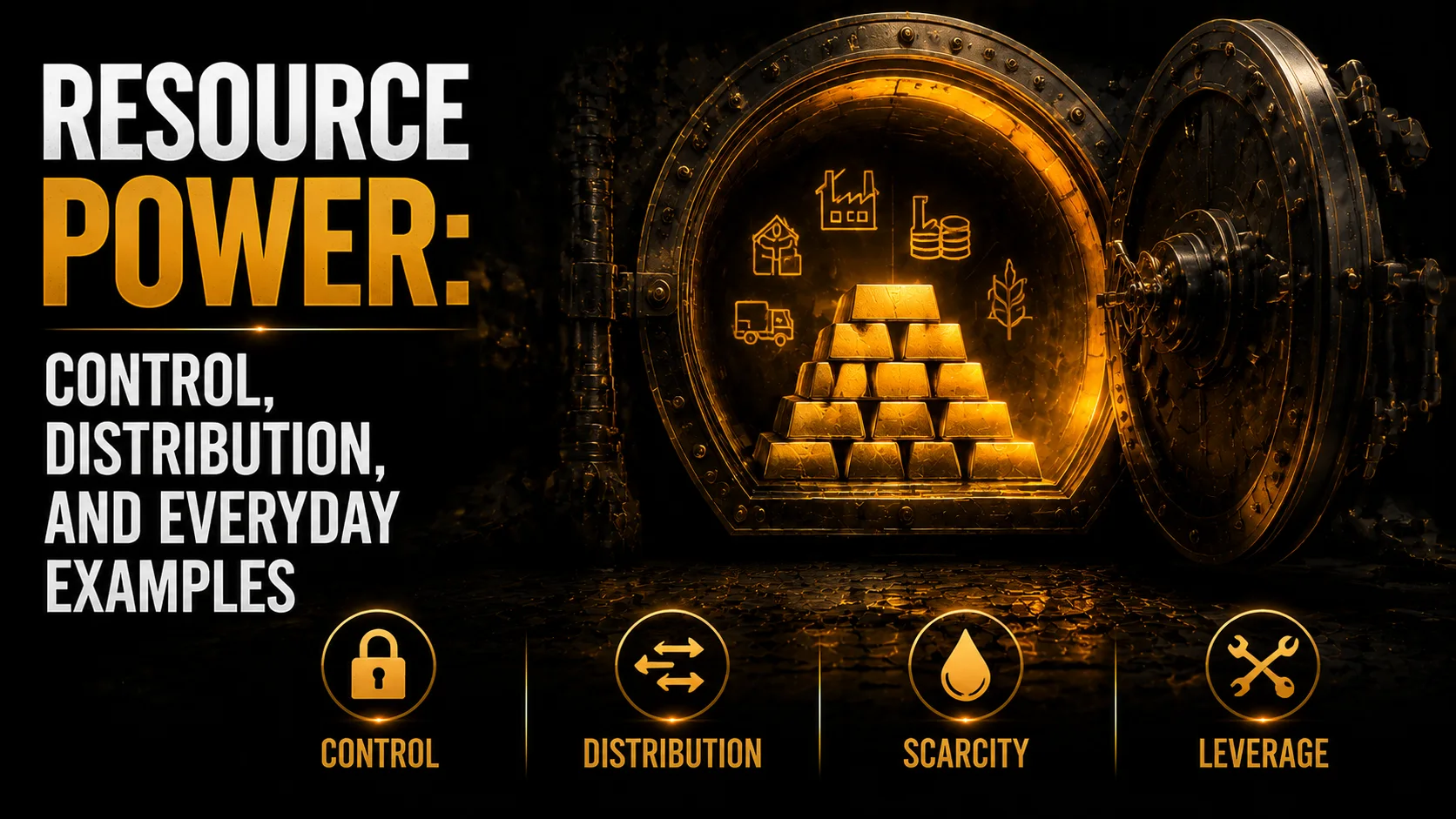
04Resource Power: Control, Distribution, and Everyday Examples
00:25:18
05Information Power: The Influence of Knowledge and Gossip
00:34:12
06Network and Collective Power: Harnessing Connections for Impact
00:41:31
07Reputation Power: Influence, Feedback, and Cancel Culture
00:47:28
08Closing Thoughts: Building Power Literacy and Leadership
00:53:56Auto-generated transcript (speech-to-text). Speaker labels not included; minor transcription errors may be present.
So welcome everybody to the next episode of our podcast, Dr. Vinay Gunther here and Dr. Paul Donovan discussing power. We've been talking a bit about personal power and there's more to talk about it. Today though we want to focus on some elements of organizational power and we're going to talk about five specific elements and I'm just going to run through them right now as titles.
So the first one is role power. So this is in the context of it could be an organization but it could be situations wherein roles like parents or something so keep it in mind for both these. So the first one is role power which as I say exists in a variety of areas. The second one is resource power. The third one is information power which is very relevant in this day of information being so abundant.
The fourth one is network power or collective power and the fifth one is reputation power. So let's dive right into role power. What would you like to say to introduce this Paul? Thank you Vinay. Right.
Now this is an essential first authority that comes to us when we're in any kind of structure or organization and as you said Vinay that can include a family system. So the role of a parent has an inherent authority or power invested in it and also the role of someone who manages others for instance has a certain authority or power invested in that role in relation to those people who are reporting to them. So this is a very legitimate source of power because within that role is embedded the authority to do things, the freedom to take action or make decisions that those who might not be able to inhabit your role can't. So for instance in a classic organization a managerial role has the power to potentially distribute work across the people that report to them to give performance reviews to clarify rewards, even salary increases or decreases. It's a role that has far reaching power and in this podcast we're going to suggest that it's very good to acknowledge the authority that your role has and the more you are able to acknowledge it the more you're able to use it consciously and effectively and not unconsciously and become clumsy with it because it's when we don't acknowledge the certain authority and power that the roles we inhabit have and that's when we start to misuse it and so that's what I do want to say something about that.
Yeah well there's lots of interesting things to say. The first is as we've discussed before there's a problem not only with the way that people use power but the way people don't use power so when someone has a role they have duties assigned to them they have power given to them over others then if they don't fully use that power it can create a kind of power vacuum and that creates as many problems in some ways as people who overuse power so we've got two ends of the spectrum in a sense we've got the overuse of power or the heavy handed use of power or the unskilled for use of power and the underuse of power and the underuse of power is of just as much concern. Now you've probably got lots of illustrations of that on an organizational level certainly in terms of let's say parenting which we mentioned which is a common role that many people have there's a problem both ways too you can get authoritarian parents who are over-controlling and over-strict and you know don't allow the kids much space for creativity or movement or autonomy on the other hand you also get parents who are kind of very hands off and don't want to tell the kids what to do so-called permissive parents and although this looks like it's kind of enabling or give the kids freedom which is true in a way it can also create this power vacuum that I'm talking about where parents are afraid or unwilling to come in and use their role power to set healthy boundaries and that creates just as much problems as it does you know the heavy handed authoritarian parent. Yes both are derived from a lack of awareness about the power that's invested in their role and using it consciously that's just absolutely true and in an organizational sense for me we tend to call the manager or the leader who does not step in for instance to take decisions in a timely way who may differ around decisions because they're concerned for instance about the kind of disruption or maybe people that maybe they'll get pushed back or maybe they'll be conflict or maybe there's fear of just getting it wrong and so a leader may be apprehensive to actually take on the obligation of their role to set direction and make decisions in areas in which they are tasked to make decisions but in the case of the compliant manager are not and that creates some examples. Yeah sure.
So for instance I was working with a manager not so long ago these examples that after so many years are easy to draw on so a manager so for instance I was working with someone where there was a very demanding client and so this was a consulting company and it was a very demanding client high-end consulting where they work in the medical and pharmaceutical arena providing consulting, consulting services to pharmaceutical and other kinds of organizations. Sometimes those clients can become very demanding and they want more and more and more and so and it should be said consultants for this reason can sometimes be treated kind of poorly because they're in a lesser ranked role than the customer who was really elevated but it needs the the decision sometimes of a manager to the consultants to decide hey are we really stretching too much for this client are we trying to give too much to them are we busting our gut here to meet unhealthy and unreasonable time demands see the consultant will just follow the lead of the manager and if the manager will say this is an important client you must do this let's work at it I'll help or the manager may say whoa whoa I can see the well-being of our team is seriously at risk here and I can also see that we may we might just find ourselves in a position of over promising and under delivering I'd like to now have a conversation with the boundaries that we may like to put in place in relation to this client now that's an important conversation and it's a great conversation for a manager of a consultant to bring but where the manager is afraid for instance of upsetting their own internal consultant or afraid of upsetting the client they may back off and just let's things play out meanwhile seeing burnout on the case of of the internal consultant burnout resentment and potentially failure in terms of delivering you see the in this case the manager of the consultant was just you know what they're doing they were under using their power they weren't stepping in and giving direction and assisting in good boundary formation and in fact what they were doing is they were using the freedom of their elevated role just to back off and watch I'm not getting affected by this terribly much right now even though I can see my team member here is drowning this is freaking me out I'm just going to back off and then watch this whole slow motion car crash unfold in front of them and it happened because the manager above simply was too apprehensive to step in and utilize their authority to create back good boundaries and that was their role to do that they failed to do that so yeah it's that in a hundred other examples where managers will not step in to make decisions or will dither or hold off in fear of upsetting somebody losing favor be it loss of approval all sorts of considerations like that yeah that's a great example and certainly if I come back to parenting although that you know we're talking about two classic roles and I want to point out that there's lots of different other type of roles that we occupy even the role of consumer has a certain kind of power in relation to service workers but just staying with parenting for a moment there's a very good book came out quite a few years ago by Robin Skinner Robin Skinner and John Cleese and they had this conversations as called families and how to survive them and they're talking about lots of aspects of the way the family systems work and I was remembered that Robin Skinner was describing how if you have authoritarian parents it can restrict a person it can you know damage them in some ways but they can recover however if you have a permissive parent who doesn't put boundaries in and doesn't really use their role power well you get people without a sense of their own boundaries and they can become quite narcissistic and quite problematic and that it's hard to recover from that later in life so that boundaries are very important and one of the essential things that anybody in a role position does is that they set boundaries and expectations you're describing one instance where someone stepping back from that I'm sure people have lots of examples where either they witness that in the form of a boss or perhaps they themselves have been reluctant to step in and fully use their role power so I think that what we're trying to do in this podcast is advocate for power we're saying power is a good thing power is important we all have power in lots of different situations and the issue is how to use it with awareness and skill how to not you know use it reactively or use it for own interests primarily at the same time to embrace having power and to to enjoy even aspects of stepping in that power role yeah yeah beautifully said we are about good use of power here and to do that we must see where the power is that's flowing through us when we occupy certain roles and you know and that's that's just such a critical component of good power use for now yeah now you mentioned this word rank which I think is also relevant when we're talking about roles and we're talking about a certain kind of formality in terms of who has power and who doesn't. Rank is an interesting word because it doesn't always go with the obvious roles that we have, and yet rank can exist in a whole variety of situations, social situations, interpersonal situations, and there's a lot of interest in that in terms of race and gender and the rank that people have. And sometimes it's complicated, sometimes you've got higher rank in terms of one sort of identity, so to speak, that you occupy and lower rank in terms of another. There's a very good book called Nobody's and Somebody's that explores this.
Now, yeah, but what would you like to say about rank? I find rank a really helpful idea and to bring awareness to the power that the role that I'm in may have. So some of my roles, or some of the roles we all possess, might just have more rank. Now, in the most obvious sense, boss has rank over the person that's reporting to them. They are in a role that has more rank.
So the idea of rank might originally have come from some military idea, where you have more rank, you get more stripes in your shoulder. Yeah, and it's so obvious, and it makes it really plain. Okay, here I'm dealing with someone with more rank. I can count the number of stripes on their shoulder, and that means that we adjust, frankly, our, we adjust how we talk to them. We tend to be more watching of their responses.
We calibrate ourselves more carefully. We're more careful to watch mood and to navigate around it. This is what we do when we're dealing with, say, when you're dealing with a colonel compared to a sergeant, you know, we, but in actual fact, the notion of rank applies very well to many other circumstances. And as I've mentioned organizationally, it can. And we know that within organizations, individuals behave differently in meetings when they're working with someone, or is talking with someone who is significantly higher rank than they have.
And their behavior changes. And it's really good to know that your behavior is changing and it can help you to notice how your behavior's changing. If you can become, if you can, if you like, put a lens over your mind, over your eyes to see who is it that I have rank over and who is it that has rank over me. So that I can manage that rank difference consciously. And so that can be easy to forget when we get really upset or frustrated.
Sometimes bosses who might be really have high rank in their roles, maybe they're a director and there's people below, but they might get really upset. So here's the dilemma. They're in a role with lots of rank. So there's more and more power flowing through that role and into them, but they don't feel very powerful. Maybe they feel upset, frustrated, exasperated, and then start behaving as if they've got no power.
They start barking orders out and yelling at people. And that's the great challenge that can come when you're in roles that have lots of rank, but actually have a low sense of power and then start behaving in ways which aren't very useful. But unfortunately, the more rank you have, that poor behavior gets magnified because we expect more of the people who are above us in higher rank. We demand it of them. We demand it in fact quite unfairly.
They're often better than us. And so they can't afford to lose the temper when they're that high up because it sends everyone into a spin. And it does in fact, the lens of power is such that when you get higher rank and you lose your temper, for instance, it's magnified many times. The person who's losing their temper might feel better two minutes later, and they go, well, anyway, let's move on. And everyone else is just, what happened?
Yeah, that's right. Yeah, they're kind of shattered. And now they're really watching carefully to see what did we do the trigger that? We've got to make sure we don't do that again because it's disturbing to be around people with really high rank when they lose their temper. And another example of that is kind of a common example of service workers because we do have a role as a customer that has some power in it and it also has rank.
And what easily occurs, and I myself, from guilty of this sometimes, is that when I'm frustrated with a customer service person that I'm talking to you, I can get irritated at them and kind of the tone of my voice is not so good sometimes. My kids point this out to me, confront me with it. And I realize that I'm doing that. So that's a common everyday role in which we do have some power. And so it's not just people who have high positions of power, but we all encounter this.
Yes, that's it. We'd like to build you and I together in this podcast more understanding about how power is at work in many, many of our conversations in interactions with others, and that it's quite probable that in those conversations one person is exercising more power than the other because they have a role which is more rankful. It's just, that sometimes use that word rankful, I don't know, that's actually really a word. But when I imagine a role that has more rank than I lift my hand in my head, it's got more authority, it's higher. And the higher I lift my hand, the more power can flow through it.
And that's, and independent of our emotions, this is just a fact. We might feel powerless, but an actual fact there's a lot of power in the role we're inhabiting. And it's very useful to be aware of that. And the customer service example is a great idea where we can forget how much rank we have when we walk into the jewelry store. And, you know, and we want service.
Yeah, and I remember you giving me another example of the manager who sort of raised things at the end of the week as an example of the way that they kind of unconsciously use their role power. Oh yeah, thank you Vinay. Yes, I was coaching someone not so long ago who was dealing with a difficult boss. And they noticed the boss had this particular kind of pattern for me. 30 on a Friday afternoon.
30 Friday afternoon is getting pretty close to what we call knockoff time. And that's probably a nosy term for me. I know you know what I mean when I say that. But nevertheless, the boss used to come to him and say and it happened on a number of occasions where they hit approach my client and say, hey, hey, I've got this particular finger on. I've got this report that I've got it hand in very early, you know, to my boss.
Do you think you can have a little look at it and just pass your eye over this? Because I've got a feeling you might be able to help me out. And some of the numbers in there I'm not so sure about. I'd really love it if you can give me some feedback on that. You know, would that be all right?
And you see, what's happening here, Venae, is you've got a boss who's wanting to sound as if they're almost at the same kind of rank. Where buddies here? Where mates, as we say in Australia? Where mate? Hey, one mate to another.
Do you reckon you could just have a look at this? So they're using language that is like a mate to a mate or somewhat of an entity. But in actual fact, it's not happening that way. My clients very aware of their lesser rank. And what really being said here is the part that's not discussed, which is the underlying message, which is if you like the managers not saying mate, by the way, remember I'm your boss.
It's not a good thing just to dismiss this request. It's like you really have an obligation to do this and not to winge about it. Not to put it off and don't dismiss. You and I both know this has just got to happen and I'm asking you to do it. And I'm asking you as your boss, so you have very little ability here just to shrug me off.
And so that's what's not being said. So here a boss is this, my client's boss is sort of utilizing role power but without acknowledging they are and that's what irritates us. We generally don't mind if a boss says, I'm going to use my authority here to make a decision. It's my job to do so here I go. Even if we don't like the decision, that's actually something most of us can live with.
What we find really irritating is bosses who are utilizing their role power but without acknowledging they are and they're doing it in a clumsy abrasive manner. And that's not OK. So my work with the client was how to actually address that with the boss. And I think that there could be a cultural component of this as well because we're both from Australia and there's a kind of a making, making way of talking to other people and there's a dislike of too much formality and there's a desire to not be seen as being kind of too high the tall, poppy syndrome. So I think that this also has this cultural component whereas in a place like China where I live, people are much more comfortable with owning their role in their authority and saying things like, your feelings are not my problem.
Very crisp and clear definition of my role in your role and the ownership of rank, which makes things more straightforward and away here. So I think this is an important thing for people to be aware of both on the down end of power when a boss is acting like this and you know it and finding some way to be clear. Oh, OK. Well, that's a question, I guess. We can talk about the boss and when you're in a role of power and the importance of owning that and not acting as if there's too much friendship, too much horizontal relationship but remembering the vertical component, which I'm going to say is one of the ways that power can be abused.
Power is not just abused by a heavy hand at pushing ramming things through and forcing people to do things. Power is also abused by not acknowledging power differences and we've seen a lot of that in the whole, me too movement and the lack of awareness that celebrities have about their rank and the way that they use their power to get sexual favors or whatever that is because they think, well, these are consenting adults and I'm just talking to a woman who's can make up her own mind, which on one hand sounds reasonable, on the other hand completely ignores this power differential. So smoothing over power differentials can be very destructive both ways. That's right. So let's move on to our next point, which is resource power.
So there's a lot of resources, whether you're a king or an emperor, or whether you're a manager, or whether you're a parent. So this is another area that people can sometimes either use or sometimes under use. And ironically, sometimes people under use this particular kind of resource power. So So that's a lot of resources. And there's another example of budgets where people don't use their budget.
And there's another example of budgets where people don't use their budgets fully. So there's another example of budgets that people don't use their budget. And there's another example of budgets that people don't use their budget. And there's another example that's relevant to most people which is as parents we have access to resources and control over those resources. And that's very significant, obviously, when the child's young we have absolute control.
But even with teenagers we still have a great deal of control. And often I think I mentioned teenagers, especially with teenagers where they're sort of rebelling or resisting power over them. Sometimes parents feel very underpowered or powerless even. And what I often discover is that parents don't really recognize the resource power that they have, especially in this day and age where different than when I grew up and you grew up where you know getting a bicycle was a big thing and I had to wait three years until I was I think 12 or 13 to get the bicycle. And you know then I love this wonderful resource that I had but it was a long wait.
Whereas nowadays there's a very different expectation about the distribution of resources. And people, kids get a lot of presence, they get a lot of stuff and they come to expect a lot of stuff especially electronic things and phones and that type of thing. So what parents feel kind of compelled to provide these resources and don't really realize that they have a choice and that they can use these resources as a part of exercising legitimately their power. Sometimes when I work with parents I need to outline to them, well you know these are there's privileges and then there's basic needs and everything that's a privilege is something that you provide and can also choose not to provide which is a way to use your power. And sometimes parents are not aware of that or they're often used that kind of power.
Yeah, and that's right. That's right. Yeah. Yeah. Yeah.
Yeah. Yeah. Yeah, that's right. Yeah. Yeah.
also problematic. But let's talk about what it means to say information is power or the power of information. Hmm. Hmm. Hmm.
Privacy also. Hmm. Hmm. Hmm. Hmm.
Hmm. Yeah, and I think that that is also so that that occurs with in roles because we have special access to information that's true and generally throughout the world The phenomenon of gossip is the way that people use powers information and People who feel less powerful also when they get to do see bit of information When they share it it elevates them at least for the moment because they feel powerful about revealing something So I guess this is also something for all of us to be aware of Yeah Yeah Yeah Yeah Yeah Yeah Yeah Yeah Yeah Yeah Yeah Yeah Yeah Indeed Yes, that's right Well So let's move on to the next one which is network power So this is interesting because it's just as the information power is a different way of understanding power and it flows as we've said not just through roles But also can flow upwards and sideways network power describes collective power basically it's an emergent phenomena and it comes from connectedness and so Here in China it's very relevant Guangxi You know the power you have is not just about position is really about the networks and the relationships that you cultivate and those Relationships are very important and really constitute the kind of core of your power But I think that that's true everywhere is and So let's talk about collective power. What do you have to say about that? Hmm Hmm Hmm Hmm Hmm Hmm Hmm Hmm Hmm Hmm Hmm And of course there's collective you know classic examples like collective bargaining or even going on strike the whole notion of unions are about Coming together and forming collective power in the face of bosses and their power And so that's often formalized and you know that's legitimate and Sometimes that operates very well However, sometimes that kind of collective power can be sort of heavy handed, you know going on strike versus You know breaking the bosses Control But there's other examples. I think that are less conflictual and that can in fact be more cooperative Hmm Hmm Hmm Hmm Hmm Hmm Hmm Hmm Hmm Hmm Yeah, and that's sort of like acting rather than kind of complaining or widding or stepping into resentment That's a way to people for people to empower themselves and I was just reading today about a little story about this It was like a market chain in the US that existed a number of years ago that apparently had a boss One of the founders Found part of the founding family who who operated in a very benevolent way like they they gave very good benefits to the employees They're very compassionate.
They're trying to make the prices very low and accessible for people to come to these grocery stores and There were factions in the family that tried to over and wanted to increase profitability and reduce the benefits and that type of thing. So they fired this guy who was in charge, the CEO, and 25,000 of the employees walked out, which is very dramatic. Just spontaneously, this wasn't a union thing. They're just like, no, we're not putting up with this. So the board had to backpedal and re-employ him.
This is a great story about collective power. So let's go on to the last one, which is reputation power. Again, these are other ways of thinking about power. And certainly, I think we can all recognize the importance of reputation based on how other people see us and based on past performance, the so-called share price of your talent on the stock market. That's one business way to put it.
So yeah, and of course when reputation crashes, that can become very destructive. We can lose power even if we're still in a role. And again, we've seen this a lot with the development of so-called cancel culture, where in a moment when someone's reputation collapses, they lose their power, you know, especially actors or something, they stop getting roles, their their whole life collapses, and their work life and all the power that they had disappears overnight. Hmm. Hmm.
And it also relates to the thing we're talking about before rank, because you can have a certain role, but in a way, the number of stripes you have is also dependent on your reputation. And if you've got a high reputation, that does give you, indeed, more influence, which is another way of talking about power. We can talk about power. We can talk about influence. And again, there's a lot of different definitions of those two terms.
And they seem connected together, but they're a little bit different. Certainly when it comes to reputation, the influence that it gives us is a form of power. Hmm. Hmm. Hmm.
Hmm. And something we could say about this I think, which is something you can do something about, because reputation is about how the other people see you. So the leverage is to be interested in feedback, because I mean in the biggest sense, reputation gives you feedback about how generally people see you. But specifically, you can inquire, be interested in, ask after people's feedback, and to know what it is that constitutes that reputation, particularly if there's some negative reputation or negative reactions, is to instead of cursing that or feeling a victim of your own reputation to ask people individually if they're willing to share with you what's going on? What is it about what you've done or maybe something you weren't even aware of that's made a difference that's dropped your reputation?
So that's an active way people can engage with that. Good. Okay. Well, let's leave it on that. No, there's a lot we want to talk about, go back to personal power, because personal power is like the lens through which all these organizational power dynamics operate.
So we're going to return to that subject, but we wanted to give this wide of you today. Mm-hmm. Mm-hmm. Mm-hmm. Mm-hmm.
Thank you. Mm-hmm. Mm-hmm.