The Power Battery: Where Does Personal Power Come From?
What really gives you power? The five inner sources you build yourself: knowledge, voice, history, rapport, character.
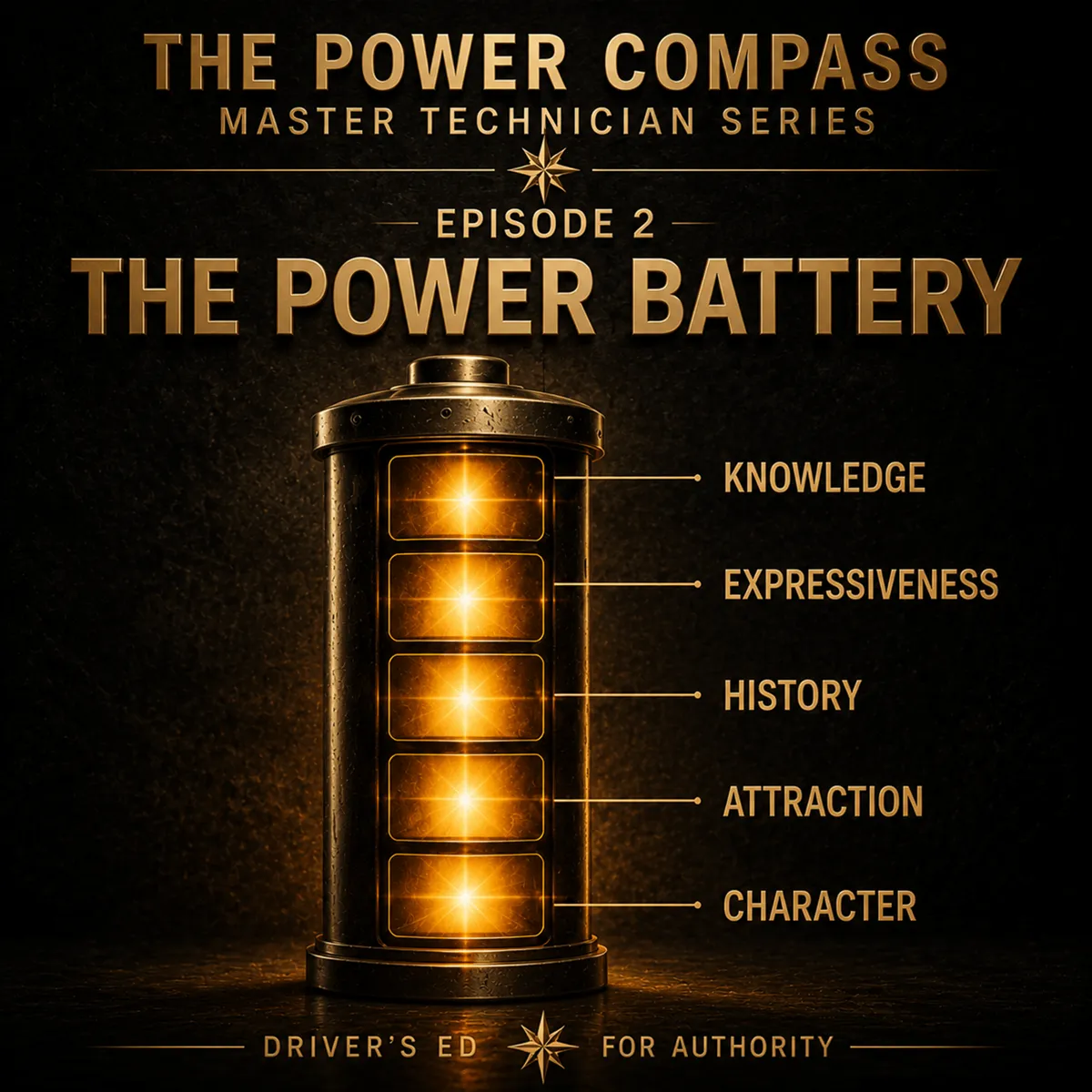
- The five internal sources of personal power: knowledge, expressiveness, history, attraction, character
- Why knowledge is more democratised than ever — podcasts, free courses, and AI
- How expressiveness helps you find your voice, and other people's
- The double-edged power of relationship history
- Building rapport and attraction even without natural charisma
- Why character and consistency earn long-term trust
- A real story of blended-family cooperation in action
Dr. Vinay and Dr. Paul explore where personal power actually comes from — not the power handed to you by a title, but the power you build from within. Using the metaphor of a ‘power battery’, they break down five internal sources: knowledge (increasingly democratised by podcasts, free courses, and AI), expressiveness (the ability to give voice to what others can't yet articulate), history (the accumulated weight of long relationships, for better or worse), attraction (the rapport that draws people toward you, whether natural or built), and character (the consistency and honesty that earns trust over time). Drawing on stories from coaching, therapy, and their own personal lives — including a moving example of blended-family cooperation — they make the case that most of us outsource our sense of power to circumstance, when in fact the biggest lever is the one we can charge up ourselves.
01Welcome and Episode Overview
00:00:00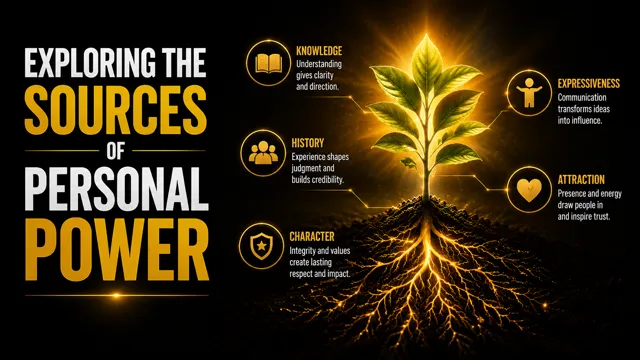
02Exploring the Sources of Personal Power
00:00:37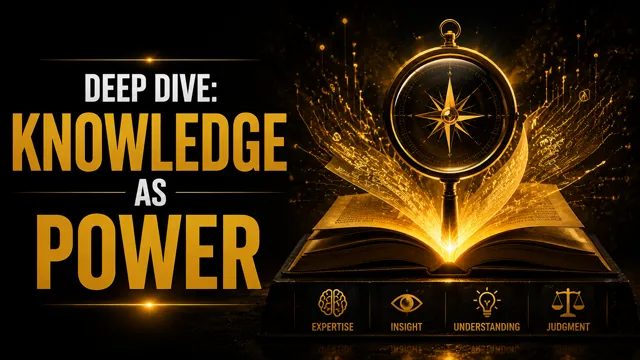
03Deep Dive: Knowledge as Power
00:03:48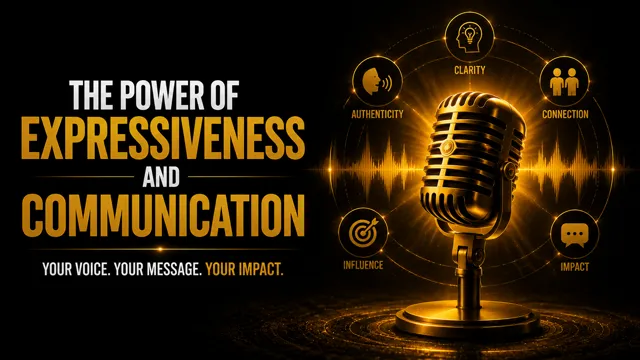
04The Power of Expressiveness and Communication
00:05:53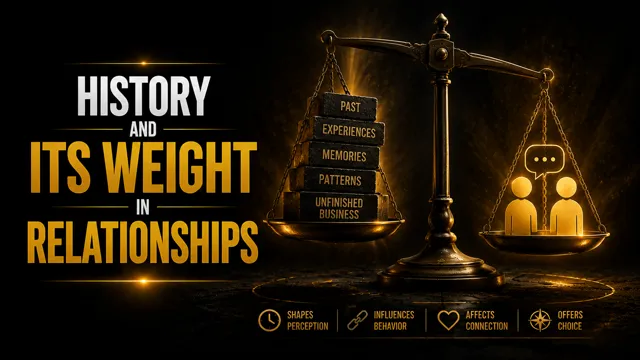
05History and Its Weight in Relationships
00:09:52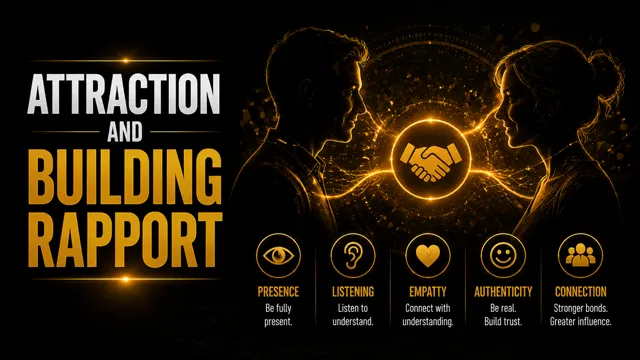
06Attraction and Building Rapport
00:17:26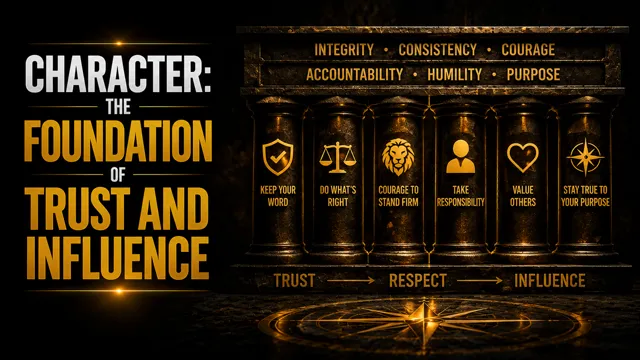
07Character: The Foundation of Trust and Influence
00:23:53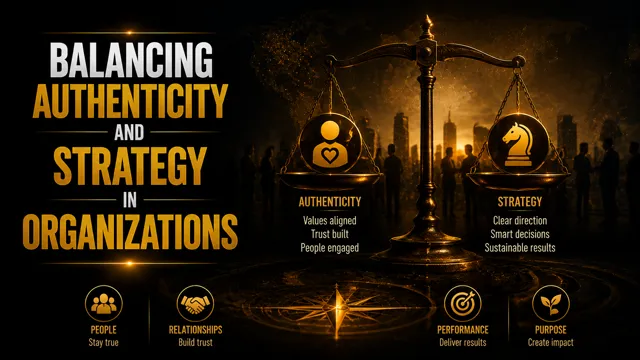
08Balancing Authenticity and Strategy in Organizations
00:31:03
09Recap and Next Episode Preview
00:36:03Auto-generated transcript (speech-to-text). Speaker labels not included; minor transcription errors may be present.
Good. Okay. Welcome everyone to our second episode. We're learning as we're going of this Power Intelligence podcast as we're calling it and happy to have you on board and very happy to be with my friend and colleague Dr. Paul Donovan to be discussing a lot of interesting topics about power.
There's an enormous amount to talk about so we're just going to sort of take it piece by piece and today we had in mind talking about some of the sources of power. We had touched on that last time but we want to go into it in more detail. Thank you, Vene. Yes. Today we're talking about where power comes from.
So it's such a fabulous topic because if we knew where it came from, that some comes from outside, some comes from inside, we might be able to utilize this power more consciously, more effectively. And in fact we can. And knowing how to use power in relationships is critical. Whether personal, whether organizationally, it has a huge impact. So today we're going to be talking about sources of power.
What's the metaphor we want to use, Vene? I like the one that we were discussing. Yeah, the power battery. It's a nice idea because of power relates to the notions of electricity as well as internal power and role power. And so we're talking about what charges us up, what gives us energy, and also what drains us in a lot of different capacities because power can be very draining.
I mean it can be energizing when you're you know for some people standing in front of a room of people and having their attention is incredibly energizing. That's what I find. A lot of other people find standing in front of a room of power and having all that attention is kind of terrifying and therefore also draining. So you know power can both go both ways. Yeah, so let's get into this and talk about power and its sources.
And to start with maybe we should just cover something about what we understand to be personal sources of power. The power that comes from within and what that is and how it is that we and if we knew what it is we could get more of it. We could get more of it. So you know we're going to I'm just going to name them and then maybe you want to just say something about a few of them. What do you think?
Shut that sounds good. Yeah. Okay, so the five personal sources of power that we consider to be something very knowledgeable to know and and and can a deeply impact how we relate to others if we knew the power came from these sources. So here it is knowledge. So your knowledge, your skills, your abilities will say more about that knowledge.
Second expression, the power of communication, how fluent are you? How capable are you of communicating or idea? Third, history, the power of history of having history with somebody, familiarity. Third, sorry, fourth attraction. Can you be someone that people feel comfortable with and want to be near?
Can you build rapport for instance? And finally character. To what extent do others consider you to be someone who operates out of strong moral platform, a great character? So they're the five and now let's just quickly dip into them and how they might affect us and our personal uses of power in relationship. Do you want to say something about knowledge for me?
Yeah, well each of these is so interesting in themselves. Knowledge is more than just formal education, although obviously that's a part of it, especially these days where knowledge is so readily available to all of us. There's a lot of people that we could call auto-died acts that is that they're teaching themselves about different subjects and of course you can even do a free course at MIT nowadays. So knowledge is probably more accessible than it might have ever been in history really. And we have so many different sources of knowledge available to us now.
Not only do we have kind of books, we have podcasts like this and now we have the assistance of AI that can kind of summarize 10 books at a time and give us a synopsis. So knowledge is a source of power which is becoming more widely distributed, which I think is a great thing, although of course, how deep that knowledge is is another question and how much it's chewed over. So knowledge is not just the facts or the basic information knowledge is also of course understanding and that really comes through a process of some dedication rather than just reading some headlines. Anyway, the thing is knowledge gives us the power in lots of different situations and whether there be an interpersonal situation, knowledge about another person and understanding them also gives us the kind of power. As a therapist that's the kind of power that I have because people open up their lives to me and I get to know a lot about them and that knowledge constitutes a lot of power.
And of course, I'm interested in using that knowledge to a system. People can use that knowledge malevolently or manipulatively as well, unfortunately. And then of course, there's knowledge in the external world or knowledge of an organization. So, I mean, there's a lot of basis of knowledge which all gives leverage in the different areas of our life. Brilliant.
Thank you for that. That's fantastic. And I'm going to say something now about expressiveness if I could the second one is what an extraordinary source of power this is, the ability to be able to articulate fluidly and even persuasively the idea. You know, and I know in my working life when I'm coaching organizationally and I'm listening to someone talk about their scenario, and then I'll say something like, okay, so is it what you want to say is something like this and then I'll express on their behalf something that they want to say. And I don't know how many over the years.
I would have heard hundreds of times over the years. Someone said, oh my god, that's exactly what I want to say. Can you come into the meeting and say that? You know, and because over the years I've developed the capacity to build this power of expressiveness, to be able to express someone's point of view in a way that meets their needs for clarity, for persuasiveness. And it's a power.
I make literally a living out of that power in terms of my coaching experience to be able to help someone to be able to say, okay, is it something close to this? And I utilize as many of their words as I can and then I will invite them in to practice expressing something in the in the difficult conversation that's approaching. And so it's a very great source of power. I love this source of power. I love to use it to help people find voice because I'm often able to give voice to something that I haven't quite given language to yet.
And many people hearing this will say, that's my power. I have that power. And that's cool. That is a very wonderful source of power charging up your battery expressiveness. That's the second one.
I agree. And yeah, sorry. Yeah. Go ahead. Yeah.
Yeah. I agree. And I'm just thinking about a client that's talking to recently. There's a version of what you're talking about that that I do with people of course. And this client was had some challenges with his teenage daughter.
And who was, you know, a little explosive at times. And so I was sort of coaching him in how to articulate, how to have a conversation with her where he could deal with the matter of her tendency to explode and but to do it in not only a non-reactive manner but a manner which was like an open inquiry. So yeah, the fine tuning of these kind of communication skills, you're right. It can make a huge difference to the power you have because of course if he just bluntly raises the topic she's going to become defensive. It's very difficult sometimes to deal with matters such as this.
And that's where we need this kind of expressive power. Yeah. What a great example. Yes, you know, I couldn't agree more. In my world, I'm often helping people find voice to say things up a power gradient to someone who is more senior to themselves where they would have no voice.
Or down a power gradient to someone who's less senior to say something in a way that is less likely just to create withdrawal, a silent reactive response on the other side, unhelpful deferring, all of those things that can happen when messages are sent down the power gradient. And either way, this power of expressiveness, how can I express something clearly that honors my need and yet holds the needs of the other in mind such that they might be able to hear what I'm saying. So yeah, it's great. It's great. So that's the second one.
Now, do you want to say something about history? What is this power of history, even? Yeah, it's very interesting to me from a point of view of another psychological modality that I use called family constellations, which basically works with what we call the field. That is your context and particularly the intergenerational context, although you can also work with the context and organizations and basically working with the kind of structure and the complex interaction that goes on in a system or a field. So within this understanding, so-called history, I say so-called, because a history is from a system or a fuel point of view always present, although we have history with someone that history is carried in the here and now in the interaction, as in a way, as the future and the projections onto the future.
So the history which we carry with us, the more history we have with someone, there's kind of more depth, you could say, but Helinger calls, there's more weight. And so an old relationship, which is older in time, has more weight to it simply by virtue of the history, even whether it's a good or bad history. And so the nature of the history of course includes some knowledge of the other person that's a part of it, but it's partly just the length of experience that we have with someone. So although that's a kind of a passive kind of quality, it's not something we necessarily actively work on, it's just a fact. And the honoring of that fact and the respecting of that fact of history is quite significant, both I think in interpersonal relationships, as well as in organizational.
scenarios. So for instance, a classic example in this way is the history one has with one's parents. Generally, unless you're perhaps you're adopted or something, the longest relationship that you have is of course with your birth parents. And so that produces a kind of a strength, a power in the relationship, a power of mutual influence and a very much interpersonal power. The expressiveness that we were talking about, that's very much an interpersonal relational power and this historical dimension is also a kind of power.
Though you can think of a relational power, you can think of it in organizations, the person who's, it might be a secretary, you know, without so much nominal power. But if he or she has been in the organization, you know, as long as the CEO, then they have quite a lot of power in terms of the history and their experience and the knowledge of people and seeing them come and go. So this is a kind of an interesting aspect because it's based on familiarity, on trust and often on the sense of reciprocity because both people have a history. So you might have some comments on that as well. I love your comments, you know, you made me, remember I had a little visit from my twin brother on the weekend and we don't see each other all that often.
He lives several hours away from me. But we have a long history together and when we stand and chat, it just there is something between us that is hard to explain except through history. There is such a deep sense of connectedness with my twin brother and I'm, you know, I'm old now. I'm 64 this year and we've been on a long journey and I'm so thankful for the history that he and I have, you know, and to be able to just be with each other so easily is just a gift, you know. So yeah, I was, I was reflecting on that.
I'm so grateful for it. But I wouldn't have thought of it unless you described it so well. And yeah. Well, there's another aspect of that which can be problematic and I think many people have experienced this and that's the previous girlfriend or previous boyfriend or the previous spouse, you know, whatever that is for one. And of course, that's often experienced by one's partner as a source of threat, the history that you have with someone, people even use that word history.
And it is because that historical relationship, even if you're no longer in it, even if you haven't been in it for a number of years, it has that sort of weight of history that, for instance, you're describing with your brother, it's not going to have that much weight. But, you know, if you have a, if you had a high school sweetheart and you married her and you were with her for, you know, 20 years, and then for whatever reasons you broke up and have a second marriage, I mean, the history of that relationship has an enormous amount of weight, including of course, if you have children together. So, the history is very significant in terms of the kind of power dynamics of relationship we could say. Up there, you know, you just reminded me of a scenario in right now and you know, like right now in my home, I have my son and his wife with their eight-month-old child. But do you know who is babysitting right now?
Beautifully, babysitting that child. Is my ex-wife? So at the moment in my house, just don't I have my current wife, I had my ex-wife, my first wife, and we have looked to develop, make good meanings of our history. So she is a fabulous person, right? But more important than that is that my wife and I have a great relationship with my first wife, such that she can come in.
And so to your point, you know, a history can be really problematic or it can be really supportive. And you can make it supportive to a certain degree, I think. And that's certainly what my first wife and I and my wife now have done. Meaning, then we can offer a far better service to our grandson. You know, it's really something.
And one would hear and not so many people have achieved that, I think that deserves some congratulations, obviously hard work on everybody's part and all sorts of patience and everything else. So yeah, that is definitely a power that exists passively and then actively you can do different things with it. I mean, the richness of the history can enhance relationship or it can detract from it. And so kind of how we use that power is really one of the skills or the capacities that we all have. And often that historical pool we could say can disempower kind of relationship, whereas you're describing where in fact, you know, the whole thing concentrides together and that the power of coming together is augmented.
Yeah, yeah, absolutely. It's very powerful. It's very powerful to be able to utilize the resource of history. And yeah, now the next of our five personal sources of power is attraction. And maybe I'll just say something briefly about that.
Now, I like the word attraction. If it's broad, what it really means is to what degree can you create rapport and ease with someone else such that they like to be with you. And some of us have this as a more natural power source. Some of us, it's not so natural. But it is something that we can develop to be able to learn how to create rapport with others such that they feel safe enough to be one of near us, to have to communicate with us.
You know, in these five sources of power and that attraction being the fourth, I, when I'm teaching this sort of things to groups, I often say not all of them will be your sweet spot. But some of them might be place where you have a strength that you can use and build and more consciously capitalize in your life. And I suspect this is partly true of attraction. Your capacity, this relational ability to be with people and to find that you can be someone that others feel comfortable around, that they feel safe with it. You can build rapport with and you can do it with more flexibly a greater number of people.
There's always going to be people in our lives with whom we can build rapport with. And the first of those on the top of the list are the people who are like us. We have a natural rapport with them. And depending upon how flexible you are, you'll have greater and greater range of people across whom you might be able to build a safe context for a relationship. And that just all depends on how flexible you can be in being rapport and in gaining rapport with another to be able to take on something of their qualities.
You know, like I was just thinking I had a client that I've been working with over the last few months and they're just very factual straight to the point that you know they don't mean to be kind of impersonal but they do have a tendency to want to go straight to the work. And I noticed that I pull up with him my major I call it my major major role who's a famous character from the Cats 22 book and where I just pick up on my task focus. And once we've done that and we get into it and then we're getting close I might say hey and now I just want to pause, you know how are things going more generally. And then at that moment they may or may not be willing to move with me into that other. But my ability that I practiced here is to be able to get into task because naturally that's I want to create safety other means earlier some people are like that I'm in that category.
This is not the case for that. So for this client and so I want to honor that there's nothing wrong with his approach it's just different to mine. But to the extent that I can actually just exercise more flexibility about the way I am like is it worth a play on more keys on the piano that are available to us then we can we can create something good together. Attractions important. Yeah and I think that there's a number of points you make which are quite significant because sometimes people are naturally attractive whether they're you know their face or their manner or their voice or you know lots of things that are kind of we call charisma or something and obviously those people who have that natural attractiveness will without effort almost be able to to draw people in and have a lot of power of course people with charisma have enormous power over other people and in all such a situation just by virtue of this attractiveness.
However you know we don't always have the perfect face or the kind of the even the power of expression and yet as you say that's what's good about I think that word report because it's like well that is something that people can develop it is a kind of a skill and it's a way that you can learn to put each other people at ease and increase the connection the attractiveness factor even if it's not automatically there and as you say with different people there's there's sort of natural degrees of attraction or less attraction and the people that are certainly in therapy the people where there's an easier connection and just a natural attractiveness you could say it's much easier to work with those people because there's just the the relationship just unfolds and I have a lot more influences the therapist in those situations of course it could be used badly if the therapist sort of went in a direction of their own personal needs but if you use it in the service of the therapy or the service the work you're doing then that attraction can be very positive and so hence the flexibility you're describing and the the factual issue the sort of task versus relational focus that people have naturally you know different orientations and the task focus and when when I'm at work sort of outside of the therapy I do tend to be quite task focused and you know when you get things done when you get down to brass tax and whilst if someone's willing and able to work in that way it's great but if we kind of just ignore the relational aspect including this sort of attraction could also be called you know warm connection there's different ways to describe it if we ignore that then it can be problematic we can end up with a bit of a brittle relationship which can happen in a lot of vertical work situations. So it's something to kind of consider as a part of our power battery, part of what charges us up, part of what gives us capacity. And even if you don't have that amazing natural charisma, you can indeed develop these kind of skills. Yes. I love that.
Thank you for that. And the final of our five sources of personal power is what could be just a titled character. And this is the extent to which others perceive within you a strong moral platform that makes you dependable, reliable, and ultimately someone who they consider to be safe with, you know, with, for instance, with precious information or with access to something that's happening in your life. And so, character is a very real source of power. Now, interestingly, one doesn't build character to then become powerful via its use.
What character is its own reward? But I want to let you know the great benefit to building character is that people follow. People are more likely to follow, to listen, to take advice from, to consider those that they consider have character who are going to consider the needs of the other person as well as their own needs, for instance, who are going to disclose their needs rather than hold them back, who are going to operate transparently and look to test their own assumptions about somebody else rather than just clinging to their own truth of them. Those people who do, who endeavor, not we don't always do this, but endeavor to do what they say they were going to do. These are simple hallmarks of those with someone with character.
And I think it's a lovely way, a lovely final point to personal power, the toughest, the richest prize is to be experienced as someone who has character. What do you think about that, Venet? What are your reflections? It's interesting because character, people tend to think of kind of as a bit inborn but embedded, and you're also describing those behaviors, which again, like skills, the things people can do, it's not just some magically wonderful character you've got, or you've raised into very healthy families, so you've just got some kind of natural steadiness. Of course, that's true.
Some people have that sort of internal quality. However, there is also this sort of skill slash behavioral quality, which is well, how we consistently choose to act, and following through an agreement, or keeping information private, these are things we can do to build our own character. And as you say, again, in this relational dimension, we say there's a personal source of power, but there are very much relational sources of power. It's not just in us, it's between us, and it does build trust, and safety on a psychotherapeutic level is also very important. People sense of safety is what allows them to come forward and me to have influence on them again.
My perspective on therapy is it's not just a kind of technical skills process and paraphrasing. It's also building the relational ground and building that trust, because when people have that trust, then they're going to naturally come forward. And I'm able to have sort of more influence over them, you could say, or more able to guide them without that trust, with a more technical relationship. Yeah, we don't get as far, and I think that's true in organizations as well. So much is built on relationship, and the relationship comes out of people's perception and their experience with your character.
It's, character is interesting in terms of, you use the word moral, because in sort of classical ethical frameworks, that's one of the three main ethical frames, is that you can be, you know, moral or ethical by your actions, or you can be moral, ethical simply by your intentions. And a lot of the injunctions to act in ethical ways, whether interpersonal or in organizations, they're sort of more extrinsic, whereas if your character contains these sort of principles that you live by, then the ethics are more come from within. So, yeah, this is a more subtle kind of dimension of power, and yet very significant, and people do indeed pick that up just sort of intuitively. They have a sense of another person's character as well as, you know, the behavior that they see in front of them. And over time, that of course builds the power that we have in relationship, and reputation.
So it's tricky though, because sometimes people don't really know who we are, or we misjudge other people, we think they're more reliable than they are. So it's also a matter of kind of getting to know people, or people getting to know us, and noting that we are consistent, and we do in fact follow through on what we say as you remark. I think hearing you say that one of the other moral attributes of this notion of building character is not lying, and I would recommend any listener or viewer of this to take on board the notion of seeing whether you can commit to not lying. And it's actually much harder than it sounds. It truly is the little lies we tell to avoid a point of tension in a relationship, that more often than we care to admit, get exposed.
And ultimately it's in my view, most things can't get uncovered in one way or another. And so not lying, like tell the truth and don't lie, is something that we sense in somebody else, and ultimately gets uncovered. I feel like it's one of the more important pieces of us building character. So can you lean into the tough parts of a conversation, if you were to not say something which is better than lying, or finding more ways to use your expressive power to tell the truth? And so it's a really interesting area.
So yeah, there's a few things that I want to comment on that before we finish because as a therapist I'm very interested in what we call authenticity, which is very much about a particular kind of honesty about yourself, or your experiences, or your feelings particularly, as compared to simply honesty about your opinions, which is a bit more sort of an external layer. So authenticity is something that we kind of have as the value and cultivate. I think it's complex, I'm sure you might have a comment on this in organizations, as issue of authenticity, because of course it's a little different than an interpersonal relationship where in an organization sometimes it's not appropriate, or it's not strategic to tell someone everything about yourself or the full truth, and sometimes you, you know, in a Machiavellian sense, perhaps in a good sense of the word, you need to withhold a certain amount of information in certain circumstances in a position of power. If there's some people that are going to be fired, you know, the boss can't, needs to follow a very careful protocol about when they reveal that they can't just blur it out, because it could really disturb the company and disturb people inappropriately. So, you know, there's complications within an organization between that sort of character trait of being completely honest and the need to manage information, for instance.
So I think that, yeah, in the interpersonal sphere, it's more straightforward, but the organizational sphere, it deserves some attention because power is also what, you know, comes from another kind of power, from withholding information and not always divulging it. That's a very strategic kind of power, which is at odds with this sort of character authenticity power we're talking about. Yes, I think within organizations, it is multi-layered. It's usually not discussed very openly, but the higher one gets, and I work, as you know, with executive teams and, you know, many organizations over the years, and they are routinely having to manage what to disclose and what not to disclose. Because on the one hand, they do want to create a genuine sense of openness, of collaboration, of intention to work, which is facilitated by openness and transparency at the senior level.
And yet, on the other hand, there's some things which many executives would say, this is not something that we would share at this time, because it will be unhelpfully disruptive. It may not come to pass, it may come to pass, and this is not something that we would openly share. And so there is this very real tension between deciding which side do we go on in relation to this topic. And I've been with, you know, CEOs who tend to do more one than the other. And favour one without knowing they have a bias towards one.
And so not knowing where you might have a general bias towards doing is going to limit your capacity to exercise character as a power source, because you're lacking self-awareness. And so, you know, the role of the team supported by a facilitator is to give feedback to each other, including the CEO about where they might see the CEO tending to be more biased towards when it may not be helpful. And that can happen in a team. That's why teams are so useful. But usually teams find it very difficult to do that unless there's a facilitator in the room, someone playing the role like I might play with a team where they're able to more safely give feedback to one another.
And know that it won't get out of hand and it'll be okay. Yeah, self-awareness is certainly something I'm very interested in from the therapeutic point of view, because a lot of the work is not just kind of reforming people or developing people. people, it's just helping them become more aware of who they are, of their own character, their own behavior, and sometimes as you're describing between the tensions between, in this case, two different sources of power. And there's not some solution to that. It's just a tension that you have to live with, and the more awareness you do it with, I think, then the more skill there is in the utilization of power.
Beautiful. Yeah, I agree. So what we've been talking about is power, you know, five sources of power that come from within, that we actually can control just how charged we are, charged up, we are in that. How full is our charge battery by virtue of building these five personal power sources, if you like, all within that battery, making sure it's all charged up. And the reason why this is such a useful thing to consider is still most of us consider power to be coming from something I can't control.
You know, I've been given power, I've got an organizationally, oh, finally, I've been made project leader. Oh, God, it's some power finally, you know, someone's given me some power, you know, or someone said I could write that proposal, and I don't need to send it round the hoop through six other people to get it edited, which drives me nuts. Finally, I can write my own proposal for the client. It's power. And it's all coming from outside.
So we content in an organizational sense, especially, I think, content to outsource building power, because we consider it's coming from outside. The truth is, a great deal of the power we use day to day is built internally, and it's personal and it's relational. And it's helpful to have some distinctions about what it is, and that's the five power sources we're discussing. Wonderful. I think it's been, hopefully, very useful for people, great talking to you as always.
And next time we'll talk about some other power sources that are more external. Yes, let's do that. Let's do that. Great. Wonderful.
Thanks for tonight. See you next time. You too.