Why Good People Avoid Power | Ethical Leadership and Responsibility
Why do so many good people step back from power? The cost of that vacuum, and the healthiest reason to lead.
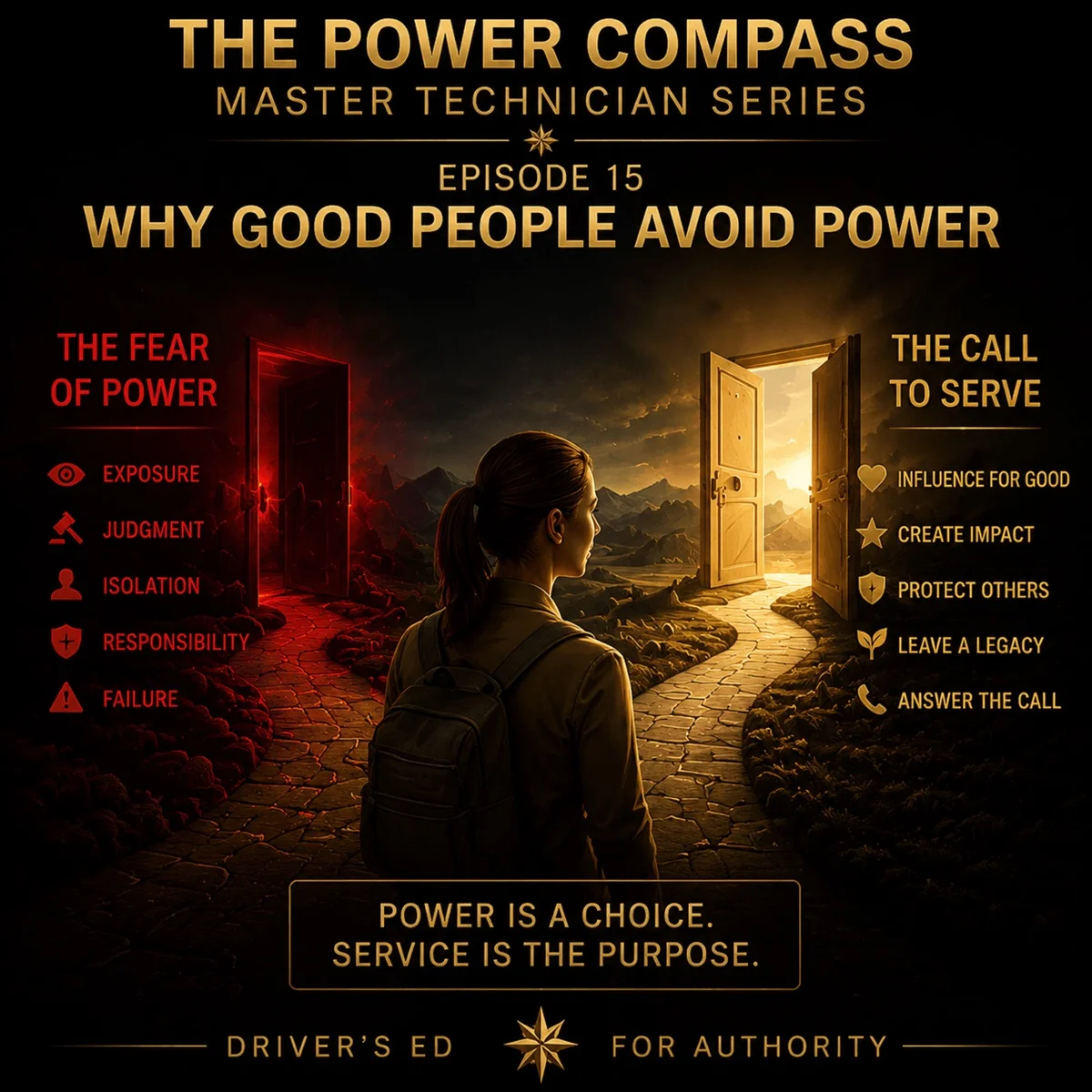
- Why ethical people often hesitate to take on power, leaving a dangerous vacuum
- The “dirty hands effect” — why no leadership decision stays perfectly clean
- Reluctant leaders in history: President Garfield and Desmond Tutu
- What the Stanford Prison Experiment reveals about who's drawn to power
- Narcissism, confidence, and why organisations often reward the wrong traits
- Resume virtues vs. eulogy virtues — the deeper motivation for leading well
- Robert Greenleaf’s servant leadership as the healthiest reason to take power
Vinay and Paul examine why so many good, grounded people avoid positions of power, leaving a vacuum that's often filled by the overconfident or narcissistic instead. They unpack the “dirty hands effect” — the impossibility of leading without some decisions looking wrong from someone's vantage point — through stories of reluctant leaders like President Garfield and Desmond Tutu, and revisit the Stanford Prison Experiment to show how the mere framing of an opportunity attracts more aggressive personalities. They close with a case for “eulogy virtues” over “resume virtues,” and Robert Greenleaf's concept of servant leadership, as the healthiest motivation for accepting power's burden.
01Why good people hesitate to take power
00:00:0002The costs of leadership and the fear of dirty hands
00:05:2503Building character to withstand scrutiny and visibility
00:10:4804When confidence, aggression, and narcissism attract power
00:16:1305Power as a responsibility in service of contribution
00:26:2706Owning authority through difficult decisions
00:35:2307Servant leadership: using power to serve people and mission
00:40:20Auto-generated transcript (speech-to-text). Speaker labels not included; minor transcription errors may be present.
So, welcome everyone to our next Power Podcast. I'm Dr Steve Vinay Ganta here with Dr Paul Donovan discussing lots of fascinating things to do with power and today we're going be examining something very important for the world which is why good people often don't want power. It's an important issue because it just creates a vacuum basically and the people who often are in positions of power don't always do so well with that.
So, thats what we're going to be examining. How would you like to lead in Paul? Thank You Vinay! Yes this is something I think may have been one of first questions which prompted me interested in Power because there seemed to be a distinction with those who are in power and many of Those, who got into Power didn't seem To Be handling it well And Seem to have Got In for the wrong reasons. I don't think my Observation is so way off.
With Many People you know like It was only what, a year ago that we had all this fuss in Australia here because apparently there were certain politicians having sex with AIDS on their own desk. In Parliament House and most of us are thinking What is going on? How is it that people With such extraordinary power to be A member of parliament And Are doing these crazy things at work. But I think it deserves a real point of discussion.
And that's when I began to think, is maybe not so much the biggest threat to leadership as bad people going? It may be good people avoiding it! Why are they avoiding power?! Why there is so much hesitation for people whom we could make great leaders and who Outstanding, they seem to be grounded. They connect with people but don't want the position, Vinay! And there's something very good about that and highly problematic about it.
I wanted us talk both those things. What is healthy? Can i start what might be healthy? Sure, firstly I want to just make a... I sort of segue backwards, which is obviously you know on the sex-on-the-desk thing. we can go all the way back to Bill Clinton. The President of United States let alone the current president but will leave him aside. it does seem to be a feature people in power and how they get perks at the office or what they consider to be legitimate And these are public examples that are renowned throughout history. really Still, we're looking in a contemporary world at these questions and we are trying to understand them using psychology.
Using our current knowledge of organisations. We have more resources now for us to ask this question. Yeah. The other thing I wanted to say was that another example of politicians in the other camp, at least from my point-of-view is Jacinda Ardern who was obviously previously the Prime Minister of New Zealand during a very difficult time when she had you know, nobody's going to be that popular during that time and during which time the Prime Minister of England was off having parties while he were shutting everybody down.
Another classic example of sort-of abuses and selfish orientation towards power. I guess what is sad if i have my personal reaction Is just she left politics. it too much for her in there Which I understand. She got a lot of flak being woman And then being at their position. And yeah, I felt really sad. Like oh my god she's one of these few people that really seem to have enormous integrity in... That she brought to the role. and you know She burned out. now. i mean You know?
I'm not a politician. I'm sure but I would. I don't know how I would handle those pressures myself still! The fact is so many People last decades often In this roles in Parliament you know, being one clear example of power and yet someone who just in my judgment is quite stellar like her. In terms of good values she doesn't last long. so yeah there's a lot of important questions to ask about this topic. Yes! There really is... it's so puzzling isn't from where we stand?
And when looking at people with power why some of the good ones don't seem to last or stay, or want to go in the first place and why others seems so drawn and successful in reaching positions of power. And some even keeping for quite a long time. I think there's one hesitation here Vinay. is that often really sound ethical people are counting their costs. you see? There was great cost off-power. There's a great cost of taking roles that have lots of power flowing through them.
You're under high levels of scrutiny, visibility is huge. the pressure is...is great. The lens to which people will look at you start to be distorted. their expectations if your take on leadership would become very high. in fact we know most people expect more leaders than they'd expected themselves. In many ways, it's an unfair challenge and often ethical people are struck with how difficult It is to be carrying power And they have power flowing through their roles the enormous responsibility of it that it's hard to keep your hands. this in in Power literature.
This notion called The Dirty Hands Effect and That Is when you get To? impossible not to get dirty hands. And what I mean by that is, To make a decision that some people will be looking at and thinking That's just off But within the context of the leader themselves. They're confronted with various choices and none of them appear to leave them With completely clear hands At least from those who are underneath. So the Dirty Hands effect very, very difficult.
And it gives I think ethical and sound-minded people a very real genuine apprehension, a pause before i step into the challenge in the burden that power will bring...and look ...in the case of some they get there and then the pressure's so great good You know, and so I'm bailing. And that's a problem as well because they may not even... As apprehensive of the...as apprehensive as there were. They might have counted all costs All pressure coming Because it is very challenging.
You know, the great story in this actually is I was talking to my youngest son about this very thing a couple of days ago and he's a budding historian self-taught. And He just said to me well dad you do now about President Garfield the twentieth president don't you? I said no! Well his classic apprehensive leader didn't even go out To campaign when he was under. He actually went to a big conference and he wasn't expecting me made leader And then he was of the Republican Party. because there's a standoff between The first two people, and they didn't barely campaigned. it went on to his farm. he didn't really count himself as someone who should be Really striving for the position?
It was very interesting turned out to Be a remarkable man Because you put in a lot of places In the short period or time I was in because he was sadly assassinated. But he was said to be a highly ethical leader, once made the president. That was your classical apprehensive leader who kind of edged forward by circumstances and prepared to answer calling then actually paid ultimate price for it. Another example somewhat parallel is possibly Desmond Tutu, Bishop Desmond Tutu in South Africa who you know was not interested in power as far I understand.
I mean i haven't read his biography or anything but In terms of my general knowledge he wasn't a power person. He wasn't really interested in Power and he got thrust up into that role And the people who pushed him to that probably thought That might be more of a puppet Or something. But he stood did some amazing things, I mean he's become renowned you know extraordinarily courageous and so that is another example of a good person who without desiring power was put into their role.
Yes it's as if life constellated itself around. the person said okay do want to take next step? It's big one! And they had anchored his. that I really believe. those people. Had done the work of building sufficient character before exposing themselves to the heat Of power, you know as Abraham Lincoln famously said nearly all men can stand adversity. but if You want a test man's character? You give them power and I think he's onto something.
He's is really on to something and so It's. it's possible that some people are just too afraid to take it because they don't. They haven't dug deep enough and don't have sufficient power to stand under the criticism And so they stay forever cautious, and Don't take up lead positions of leadership now. That's a problem isn't it? Yeah Yes being that heat position. Correct, thank you for absolutely. they haven't dug deep enough down to build the character...to have a personal power that's portable and independent of whatever roles there may be in and authority or power will flow through them To able withstand pressure on it.
If this is true now you know, it's possible that a lot of us become people who can throw a stone at a leader up the top thinking yeah aren't they doing a terrible job but haven't actually built the character enough to stand in the heat. I'm taking those roles. so we're too afraid. We are too afraid! I relate this myself...I remember when i was uh um a kid eighteen and i was at school. Well, you know of course I didn't vote for myself but blow me down.
I was one of the twelve students voted. in fact i think I had The most votes. But then they said a twelve Had to decide who is going To be the captain. so that have their twelve students. and? Was terrified Of actually getting school captain. So we had to list down three names And I Didn't put my name on any of those Three options because I was terrified. And to my horror, I was made school captain and it was just...my worst fear!
And um..and i think i've spent a good deal of my life working with how is that can be afraid taking positions where ive been asked step forward by other students not do something super human or even something much older adult could do? Well, I'm interested in that light. What like if you can say briefly something of your experience is stepping to our role or power? what did You discover? um i have taken one step after the other Into Power and mostly what i've feared veney Is the exposure and visibility That it's brought right. i recall a couple years ago And i wrote my book I was terrified of doing a PR program because...I thought it would put me on TV.
And then, i did all this work around what I was afraid off and..and.... ...i thought about writing the book ,and i though that i wanted to actually speak for it. So i did the PR Program and blow me down! Im on channel seven morning show few times and im at ABC Radio Harvard dozen time being interviewed. incredible realization is that I didn't have to do anything different than what i've been doing up until then. authentically who I was at that time and thats been my experience.
That sounds doable. yeah, just keeping yourself okay? Yeah well here's the thing keep being yourself while genuinely putting your self under the old microscope so as to consider Where are my weaknesses? where are my strengths and what might I need to adjust. so i was already in that practice.I Was Already sitting down writing Reflections. after, I finished work with a client or did coaching sessions Or gots. you know the big one is getting feedback from My wife who gives me feed like like no One on earth. and And they're really seriously think oh wow i Know You're The same today. you know Think gosh i gotta Really Think About That. you know Am I going to think about it or am i just gonna dismiss?
It you know because she's. Just this all that'll be other and This. so, well i'd be myself while i continue the practice of self-examination. Yeah That's the caveat And that's that's what i suggest is yeah important but builds The character and things that you're talking About. they will come To a little bit. perhaps good time to read out this quote from ambrose red moon who says courage Is not the absence Of fear but the judgment that something else is more important than fear.
So here we're talking about the potential for motivation to face these fears, a motivation that would be a motivation. That's about contribution rather then sort of you know self-benefit. Yes absolutely and perhaps we should move into The fact some people seem to seek power For powers sake And that's not helpful for us as a collective. It is not very helpful to be led by people who are looking for the visibility, notoriety... ...the freedom and power over resources.
The sense of self-bolstering can come from taking positions with rank. That isn't what helpful. I don't consider that to be any worse than the people who shy away from power out of fear and whose tibidness makes them play small, but i do think some people are just seeking power. You know a little anecdote on this. you've probably heard about the stanford prison experiments where they were years ago a professor had students play the role of either prisoner or guard.
And experiment went so catastrophically wrong, that professors girlfriend at the time who later they got married came in after six days and said you've gotta stop this because it was all happening in the lower level-the basement of the Professor's house...and guards were acting absolutely appallingly. And so a lot has been written about the Stanford Prisoner's experiments. But here is the twist, all they did to attract those people was put in two line ad and say it for prison experiment.
So sometime after that Stanford Prison Experiment some other studies looked at what would happen if we do same ad but took the word prison out. And then, and they ran it across several states in the U.S., some states that left their word prison out...and for all of candidates who came forward tested their levels of aggression! For the ad that had the word prison in them, people coming forward were significantly more aggressive.
So, the Stanford Prison Experiments may have in fact attracted a very aggressive kind of personality. All you had to remove was the word prison and then levels of aggression were dropped right back into those who who came forward to be involved. It was just a social experiment, not a prison experience. That's very telling. yeah important piece of information because the lot has been made of that. and people's aggressive nature...
The way circumstances bring out their aggressive nature you're pointing out from these facts. in fact it is not just peoples' aggressive nature certain kinds of people with certain agressive nature. We'll do certain kinds of things with power. Yes, and there is a sense that some people will be attracted unhelpfully. I know within organizations what has generally been rewarded Is People Who are more extroverted who speak better in front Of A group?
Who come up With quick Answers who Are More Confident. And that confidence can sometimes be misread. We could think it's maturity, its not maturity. It is just confidence. and That confidence isn't enough to qualify someone To take on leadership roles. But within organizations often there are so hungry for Someone who knows what the hell they do. Yeah, that's right. Someone who is willing to step into the vacuum and as you say often it's people perhaps even overconfident have got some kind of chutzpah or charisma particularly...
Who are a little narcissistic because They sort of have been invulnerable to feedback or other people's opinions, which makes them strong on the one hand. On the other hand yeah it can be problematic in terms what motivates and how they behave once their leadership role. Yeah And its plain that percentage of narcissists is relatively low in a wide population but higher among CEOs. And so we're not saying that every second CEO is a narcissist, but certainly the percentage of narcissists is significantly higher in CEOs than it is in the wider population.
People who... It can look as if it serves them because they just press on no matter what Concerned no matter what the wind took that complaint. Let's make this tough decision. They're going to show decisiveness step forward and create something for people to follow. But but it's quite plain, it's not actually That useful. It's unhelpful in a leadership role. It may have some initial kind of attractiveness toward the role, but it does not provide for sustainable useful leadership at any level.
That kind of analysis as well? Well I mean you know...I wouldn't say on any level! To some degree that ability to be insular and make tough decisions or not being too affected is useful. otherwise yeah..you get burnt out or crushed by other people's reactions. so.... Some perhaps are healthy or necessary. It's just that when it, sort of the predominant motivation. You know we use that word narcissism and perhaps We should pause there a little bit because That's become such a populist term And I think people bandied about. yes my ex was a narcissist at its almost Become a bit meaningless Because anybody you don't like or anyone who thinks is selfish Just becomes a narcissist. so Perhaps Its good to illustrate that or outline it by saying the origin was the myth of Narcissus, the Greek myth.
The guy who's looking in the pond and he became fascinated at his own reflection. That's right, he falls in love with himself rather than Echo who is the spirit. So uh...he moves out of relationship with other people into a relationship with him self. that was original myth and psychologically the term used to refer to. people are very focused on themselves their own needs. they exist as an echo chamber where don't really hear anything else outside themself. so I mean there it to some degree, and in fact if I can just make a psychological point. we all start with that.
I mean babies are the most narcissistic creatures on the planet. they don't have any patience! And If They Want Something then they want something straight away. so We All Begin Like That. it's not like its unhealthy. It is how it Is...we're dependent..and very vocal In what our needs Are. Human development goes through stages where we learn to socialise and be aware that there's other people, if you're angry or can't just bite someone as little kids do.
So it is a whole learning process. sometimes though set enough limits on a child who don't introduce the notion of the other person, maybe support that child in their narcissism or hold them up as little princesses. Again it's natural but if you do anything too much its not healthy. and so these kids grow without a sense really their impact on other people. and that's what we mean by narcissists or narcissism, or narcissistic behavior.
And so this is the kind of behavior it's better to talk about behavior than a person. really some people have a lot more of that kind of behaviour... ...and those people are the people. often therefore want to move into roles-of-power. Yeah thank you That's absolutely right. You know David Brooks in his book in relation to how they build character. He quotes some recent research that suggests the average level, like narcissism is a psychological test for it's bank of questions and you're scoring on that bank question can give some indication as to how close are actually narcissists kind diagnosis or continue further down.
And he suggests that the more recent generation, that it's hit adulthood. Average score on that scale has gone up and so It is interesting. like for instance there's a question in says I'm very important person In the nineteen seventies. about twelve percent of people who are asked this answer yes In two thousand and seven eighty percent of people answered that question. Yes That's Yeah dramatic finding, but it's a generational shift here.
It's its fundamental generational shift. now Now that's only one question And it doesn't make the whole generation narcissists which you and I want to be clear To say. But determine narcissism You know is a bank or questions? That's one Of those questions. and so at any rate The average has gone higher up, and so we have a cultural tendency to want see ourselves as increasingly important. And it does run a little contrary to the notion of humility. that is perhaps one of the pieces which goes into our final discussion really around.
The question is, perhaps not so much do I want power. But the question is what contribution matters enough that i'm willing to accept the burden of power? What contribution might matter With power, it's a responsibility. The power is the responsibility—it's not a reward —is the responsibility.". So this is where I consider, Vinay, that criticality of why don't good people go to want power? Well partly because they count the cost of it and its very useful. but i also wanna suggest that Power is something only picked up as tool if necessary. get our job done to make a contribution, to devote oneself to the purpose in one's life.
And what degree must I use power... ...to further that purpose in authentic and genuine ways? That is the question we need to ask. Yes! It is different kind of motivation that we are proposing for having power and a more, you could say conscious or noble motivation. I think it's good to point out that there are people who step into power perhaps after revolutions. Who have that motivation? No question! You know they're fighting for the people.
They're fighting justice For very noble things. That is really it appears their main motivation for stepping into power. And then sometimes they do step in to power and don't. so well, these bring other questions about perhaps the knowledge of how to use powerful or skillfulness which we're very much on about issues of character that even though their motivation was good, there might be characterological issues whereby still a certain kind of narcissism as we're talking about it in the motivation itself.
A tendency to feel like I'm the saviour for instance and i am going save people which has some positive motivations but is too much focused on self. So these questions are very difficult because you know anybody can look through history and find examples of people who were well motivated. so part of its motivation, what your pointing out I think is essential cause the alternative as a motivation that as he says just about rewards or privileges or y'know...or just the feeling being able to control and be in control indeed some supervising someone who's in a religious organization.
Because there are celibates, they're in positions of power and some have very good motivations ostensibly but I can see that people become play things within that. So, you know it is kind of complex. however we don't want to just throw up our hands and go. It's all too difficult or power corrupts. Power...you know absolute power corrupt out absolutely like Lord Acton says You know what? We wanna push through that And say despite the dangers Despite The failures That often occur as I've said with well-intentioned People. still It's important to address this topic because otherwise, yeah people who have high values just kind of step back and go oh it's all too messy.
And I don't want to get my hands dirty with all that... ...and i'll just live my life! Of course there are people entitled to do that. however then its the problem. where theres a vacuum other people come in. Well so well said This is, we're raising this because not the problem's unsolvable but it asks something more of us. to be able use power well certainly requires character. But often can't get a job done without power. so what do you then and here I like I need to bring a willingness to think about who i want-to be.
And, and...I think there's difference between for instance you know resumé virtues and eulogy virtues. and if we're going for resume virtues Am I winning, you know? Is this going to get me the next little bit of take-me-to-the-next step and will I achieve a notoriety at that level?". They're actually not illegitimate questions. They are good questions for a resumé but on their own they aren't enough to deepen our core to make us ready to utilize power.
Eulogy questions! And eulogy virtues Much more likely to do that. What is the legacy? I want to leave. what Do I want people to be saying about me when i'm finished doing this job, how can I contribute? where Is The biggest problem around Me That I might Be in a position To Contribute to? and you know What is life asking of me? And I think eulogy Virtues Maybe one of the things to reflect upon if we want to make ourselves ready for power.
Yeah, and just picking up on what you're saying like because I'm very interested in growth personal growth as i know You are too And We both value that The development Of Ourselves As Individuals Supporting Other People To Develop Themselves Seeing Life Is A Process. personal development that doesn't kind of never ends. We're always improving. I'm sixty-seven, iIm still going and learning things about myself. Im still open to learning and enriching. who am how can contribute? so this notion a personal growth is you know some people really take it too hard. they do seminars or read books and therapy appreciate respect support engage with what we are talking here a different dimension of growth which is personal growth as might be exercised in what you'd say the public sphere, We can see that this sort of taking on responsibility and choosing to step into power, even though it might be kind of scary is a part of our personal growth development.
And so its something...a way we contribute in the way you grow. So there's whole different ways looking at power which also keeps us more true because good intentions are not always enough. with this sort of motivation though towards others and toward ourselves, yes I think that it's possible to take on power. And yeah...to actually do a good enough job! To do something which is meaningful both for us selves as well as other people.
Yeah..I think thats true. Suggesting that power might be, and stepping into Power. Might just be the very edge of us stepping in to our next version Of ourselves And how we're willing To take on and utilize Power well with others around Us. I think it's a Very real personal question on, it relates very directly to the question of whether we're willing to grow. Yes I ran a Gestalt Therapy Institute in Lisbon Australia for almost twenty years and now I've done something like that in China. at the beginning well i stepped aside in four and um...I got remarried in two thousand change of their email address because previously I was using the university email address and then i stopped working at University.
And, uh...I had to come up with a new address um.. I-I had a domain which I registered in. that I have to work out. you know before they're at my wife for the time suggested why don't put chief? You know Chief At And I'm like, oh that's a bit much you know? Tuffing myself up. Like I am the big chief! So it was a bit resistant to that. however as much of her advice...I think it is very good advice and i did listen to it. take on then my chiddle.
It was sort of flapping at me self funny but self-effacing. almost At same time Over the years, I really came to appreciate that suggestion of hers because i could see That I had this kind Of reluctance To really yes. I was The founder of the institute and I Was you know the trainer And did a lot of things like You do when you establish an enterprise? And I think I was fairly good at it. and Yet you Know I always wanted to be Like little humble or Kind of not put myself too much in the center Or something like that.
And over the years, I realized that as much of it seemed to be some kind spiritual notions. It really wasn't very useful in being ahead at The Institute and having to own my power. Sometimes using it was a point quite few years later when... ...I made decision not let someone go into last year's training. pause for a year because I don't think you've got enough insight into yourself. There's a lot of conflict in the group that is centered around you and this person didn't like it at all, when i made the decision...I knew there was very difficult decisions. he wouldn't have liked me if they were reactions. don't change your mind, I'm going to put an ethics complaint about you. and i said okay well so be it.
And he did! It actually caused me a lot of trouble. but in that moment I realized yeah...I really had to own my power and have been willing to use it. That was one those times where couldn't just friends with everyone or nice guy. So yeah..i think there's big peace here stepping up into the role of power and for those of us who are not so ambitious to be willing, yes as we're talking about take on their responsibility in the consequences of being that role.
And therefore yeah growing I feel like i learned a lot about myself ,I learnt alot about relationships & I learnt too not be worried what other people thought me. What an incredibly freeing lesson but through difficult times. That's very difficult to have someone make complaint about you, other third parties and then deal with all of that seriously reflect Have I been unethical? Did i do something? Then be able say well no just upheld the standard was clear And it is my job. so And that's a great example because it is huge cost, isn't there?
Personal costs to be willing to stand in the power on the obligation of the role even when the role has elevated. That reminds me, you know Martin Luther King said The ultimate measure for man. Well, I think I may know. It didn't use this quote before. is it the same quite? I mentioned its not as different. No Yeah Is where he stands in moments of comfort. It's not worry. It's the ultimate measure of a man who does not really stands in Moments have comfort. but it's very stands. and how we stand in challenge an incontroversy And that's where we find out here We are yeah, and um, and that's what we find our.
Can we stand the heat in the kitchen? That's right. So that becomes a different kind of motivation for stepping into power, so let's talk finally about Seventh Leadership. I think it's nice little piece to end on because It is great book by Robert Greenleaf and he makes...I don't know..it's a bit distinctive cause i haven't read a book which just focuses on this. And so I like the way that he talks about it and basically, He says A leader must be a servant first.
So he has his whole kind of humble orientation towards leadership where It's motivated by a desire to serve others rather than, you know your own benefit. You could say this is maybe sounds very noble or almost a bit spiritual and yet I think it's an important point that he's proposing in the way we're picking up where yes power is reclaimed as responsibility rather then just a source of personal freedom and autonomy which also is And focuses on how facilitate the growth and development of people who are following us rather than just, you know what we get out it.
So this is where he has his nice terms Latin term primus inter paris that was first among equals. so yes were all equal then stepping into their role come from a sort of spiritual background, so I really like this kind of thesis. Me too! Yeah you know it's the ultimate test whether a leader can be in that position and in fact become healthier and wiser and freer rather than just an asshole. yeah i think its the ultimate expression of leadership. actually I mean, when this book came out it was a revelation.
It wasn't so new to me...I'd been operating in church circles and honestly the notion of servant leadership had being talked about from pulpits for decades you know? And there's an example actually it's giving up his own life. That was the whole notion of if you go to lead, You must be prepared To serve and just served with everything we've had to give up your life. that Was a young man who spent time in church as I was familiar With. but when this book came out It really introduced some Of the depth for that into a corporate environment.
And since then even When looking at leadership you know, the leadership circle and Bill Adams who wrote Scaling Leadership speaks about levels of leadership. And levels of adult development on the leaders that they can be depending upon at what level maturity an adult is at. An integral is highest-level... ...and there one book he makes specific reference to describing this exquisite expression of leadership is Servant Leadership by Robert Greenleaf.
It's the notion of being there to serve, To serve the mission at hand and to serve the people. I think it remains a true north star that we can set our compass around in terms Of a direction that we want to move toward as we exercise power And That would give us guidance wisdom as we exercise the power in our roles. you know I think it's a fantastic book to read. Great terms, Power and Wisdom. yeah that is nice synergy. what were proposing basically? rather than whether As you mentioned before, what is the problem or issues in your care about enough that you're willing to carry the responsibility of power and help solve those?
That might be a social environment. A church environment... ...a family environment.. Or it may obviously have been an organisational environment. Yes! The fundamental message for this episode isn't it? The destination, it's not the purpose. It is...the contribution that we really want to occupy and the power that we require To do this. And....it will come with a cost! It won't be easy! So count on your costs before you start.
That´s the invitation everyone has watching. And yeah, we're asking you to step into the power vacuum and be willing to come forward. And test yourself! The world's going to a better place than more people who are well motivated do that. Yeah I just love it. This episode is called Step In To Power To Be Courageous To Count Something More Important Than Fear That Might Stop Us. It's great. Thanks Benet, see you next time!