Introduction to All Things Power: Why We Avoid Talking About Power
Why is power harder to talk about than sex? In this episode we introduce the hidden dynamics behind every relationship, role, and boardroom.
- Why power is often called “the last taboo”
- Power over, power with, and power to — three core dynamics explained
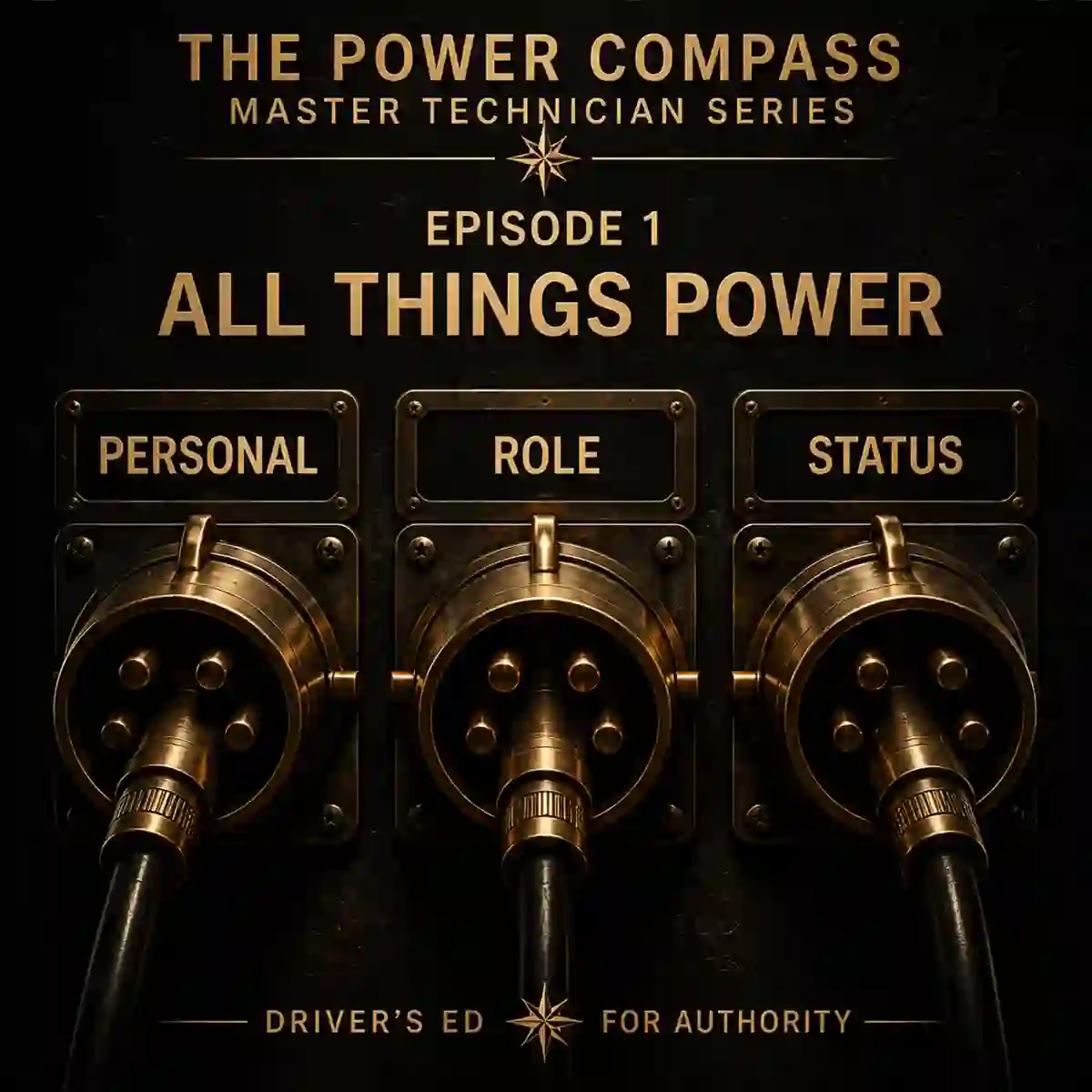
- Personal power vs. role power vs. social status power
- A first look at the power paradox and why leaders get stranger as they rise
- Introducing the 150% principle for high-rank relationships
- Real-world examples from couples therapy and a corporate power struggle
- The mission behind The Power Compass podcast
In the opening episode of the Power Compass podcast, Drs. Vinay and Paul explain why they’re devoting a whole series to power — a topic they argue is harder to talk about than sex, precisely because most of us first experience it as something used against us. They introduce the foundational distinctions the series will return to again and again: power over, power with, and power to; personal power versus role power versus social status power; and give a first preview of two ideas explored later in depth, the power paradox (how gaining rank quietly erodes empathy and self-awareness) and the 150% principle (why those with more rank carry disproportionate responsibility for a relationship’s health). Using examples from couples therapy, a corporate team caught between formal and informal authority, and their own coaching work, they lay out their mission: to make the normally invisible dynamics of power visible, so people can wield it — over others, with others, and toward a purpose — more consciously and skilfully.
01Welcome and Podcast Purpose: Exploring Power
00:00:00
02Why Power Is the Last Taboo
00:02:06
03Personal Experiences and Perceptions of Power
00:03:51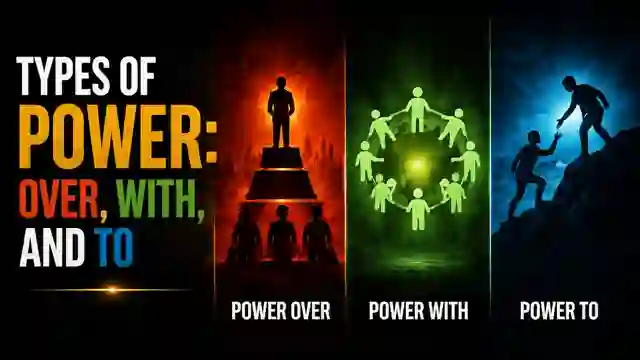
04Types of Power: Over, With, and To
00:05:34
05Power Dynamics in Relationships and Organizations
06Making Power Visible: Case Studies and Facilitation
00:13:55
07Why Understanding Power Matters
00:17:57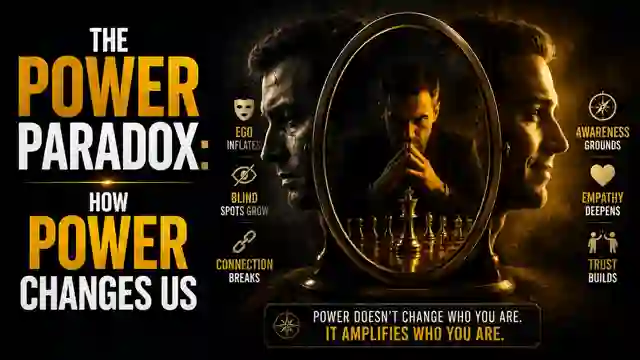
08The Power Paradox: How Power Changes Us
00:19:44
09Using Power Consciously and Skillfully
00:23:02
10Personal Influence, Feedback, and Growth
00:25:12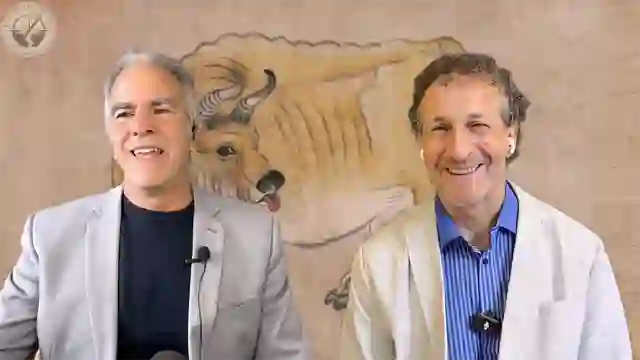
11Closing Thoughts: The Journey Ahead
00:27:57Auto-generated transcript (speech-to-text). Speaker labels not included; minor transcription errors may be present.
So we'd like to welcome you to our podcast, the Power Compass podcast. I'm Dr. Steve and Aguntha and I'm here with Dr. Paul Donovan. We're both fascinated, excited, thrilled by the topic of power.
We've both got PhDs in the subject. We've both written on it and we're here to give you many episodes. That's our plan. On the topic of power, exploring lots of different facets, different theoretical understandings, different philosophical understandings, different practical understandings, because we want to empower you to be able to understand power and use it more wisely, more skillfully and more successfully. You see, we're the contention that power is not discussed as much.
as it most sensibly would. We consider power to be like the electricity that runs through us and the roles that elevate one person from the other, and we want to give some visibility to that electricity. We want to talk about what's actually making the difference. And that is power. It's the central question in leadership of any kind, personal leadership, leadership in roles that people take that might elevate them above other people in those roles.
The question of power is central. The question of whether you exercise good leadership largely rests upon whether you have consciously and skillfully use the power in that role as effectively as you could. So that's why we're so delighted to be talking about it. We're absolutely wrapped in and We have this first question and that is why don't we talk about why is not power talked about very much? And it's not, in fact Dr.
Julie Diamond who wrote power a user's guide says that in modern day America sex is easier to talk about than power. And it is the last taboo, it is the last taboo, but it doesn't serve us to be a taboo. And so I don't know why do you think that it is so difficult for power and whether someone has power or not power to be something that a conversation lands upon or a TV or an interview might raise. Why doesn't it happen when I think because really power is the context in which we've all been hurt sometimes. traumatized because we've all been in power relationships where we've had less power because the children, you know, were down power.
It's our first down power relationship and of course not only with our parents but with the adults around us in general and specifically in school environments and even within our peers at school there's the different grades and the picking order that exists so all of us have been subject to power at a time where they were vulnerable and yes often it's been used against us in ways which are very painful or debilitating and so often it's, you know, we develop this attitude towards power as it's something bad or it's something that's used to hurt other people and it's natural to carry that attitude forward in life so I think that's the big influence and it's not just childhood also in the adult world and I adult relationships that's a lot of situations where again we can be hurt by power bosses who, you know, similarly fire a soy, different kinds of injustice. I think pretty well everyone has those experiences. So power becomes associated with something fearful, with something negative, with something painful. So I think it's not too surprising from that point of view that a lot of people were worried talking about it. Yeah, well said, you've reminded me of something that I do sometimes when I'm teaching power to corporate groups and I put up a slide and image of lots of different boxes of pictures from everything from, you know, Tom Cruise to a harbour car to a tiger to a religious leader to a forest.
And I ask people which one of these images they relate to power. And I'm always curious the diversity in the room. Power is such a... subjective thing, how we hold the notion of power in our minds is quite distinct and personal to us. But when I ask about the feelings they have when I say, what would you say if I said someone has power?
Like you've said, most people say they don't like that. They are uncomfortable with it. And they don't like to think of themselves as having power. There's a minority that do, but most actually aren't very comfortable with that idea. And you know, this is the, I'm going to introduce our first power concept here, and power over power with power too.
And there's a, there's a, there's a reactive and a creative version of all those three that we'll talk about later on. But most of our first connections of power is because someone has exercise power over us. But it doesn't have to be the only one. power is exercise but in fact it's the places that it's most memorable for us that it is in that way as you've said. Power over you know that power with the ability to be able to exercise power with a collective, power that's generated by joining with people to achieve something, the momentum that's created.
That's a remarkable thing and the power too, the power that comes from no having a mission quest of some kind, the power that can flow through us from a driven by wanting to make a contribution. There's a power that comes when we have the power to TO power. So yeah it's exciting. And yeah I think that highlights some of your and my personal values which is that we carry into this podcast that we're not just interested in discussing philosophy. or organizational practice, what we're certainly interested in helping people become more skillful and knowledgeable.
Fundamentally though, we carry these values with us that are about empowerment, that are about contributing to a better world, that there's large vision and we're interested in how what we do in this podcast and how we support people can assist in the development of a better world. A much bigger vision even than organizational visions or personal visions. So that's something that I think drives you and I. Yes. And absolutely thank you for that and and perhaps we should then go to the ever present notion of power.
It is really so alive between us. Power is running between every interaction and we're usually remain somewhat uncomfortable. conscious of it. But if you consider it in the most obvious cases where you might have, for instance, in the context where I work in a corporate world, someone might give feedback to somebody else, or someone might run a meeting or hire someone or choose to be silent in a meeting or interrupt somebody. They're all power moves.
They're all power moves. Even stopping and listening can be a very big palmoo. There's nothing we're doing which doesn't have, and especially when we look to influence in any way, we're looking to use the currency of power to do so in one form or another. I'm wanting to, I know we both are wanting to wake people up to, how you're using power around you. When you notice you've suddenly have more power, you know, when do you get sit down with friends, for instance?
and you notice, I've got more money than they do. Oh, I feel a little elevated here. Or maybe you're sitting with friends and you realize these guys have got more money than I do. And houses. Yeah, and bigger houses, and nicer cars, and go on better holidays.
And suddenly you might be feeling less powerful. So these things can affect us. We're going to talk about in subsequent episodes, the importance of building personal power, which is more robust, more portable, more resilient to context. But even then, most of us will walk into an interracional context and notice, oh, to use your language. I'm like, am I down or up here?
There's always that little ranking that goes on. It's, I think, a mammalian thing, who's where on the picking order and yeah, I want to, come in because you mentioned personal power which is like we can simplify in some ways power into a number of different dimensions and one, as you say, is personal power. And people can have personal power but not necessarily other kinds of power. However, personal power can easily spill over into acquiring, for instance, role power. That's another classical type of power, the power, the position that's not so much about the person but it's the resources and role that they exercise.
And also when you're discussing about who's got the house of the income, you're also talking about another kind of power that we could call the power status, which is not necessarily just personal and it's not necessarily to do with a role, it's more to do with social perception and yet it's very significant and there's a complex way in which these three types of power can interact with each other, can augment each other or. can in some way almost exist a little bit separately. So someone can not have particular rolepower. They not even feel that power personally, powerful personally. And yet they may have a lot of status.
And they may not even enjoy it that much. So it's kind of, there's a lot of analysis which we won't go into here, but in subsequent episodes about these. And I mean, there's a four-type of power that we should mention because you mentioned power with which is the power of the collective. So that's also another dimension of power. So we want to kind of just introduce to people these different dimensions.
And I think that's great. Thank you. I want to say one more thing which is, yeah, it's an issue because I work with, especially in therapy with individuals and couples and families, particularly. So for instance, in a couple of this issue of power is quite significant often, people usually come into a relationship. with some kind of power differential.
Now that might be knowledge, someone's got a PhD in someone else's, just got a undergraduate degree or maybe someone doesn't even have been to university that's one kind of differential. Another different tool is when people come into a relationship with different economic resources, whether it be from their family or they've got a business or they've got an income. So when I'm working with couples, these are always things that are often difficult to deal with and can be sources of conflict, they flare up, but to be able to talk about them and successfully address them, is something a lot of couples don't have the resources for. I mean, you know, let's say a woman moves into a man's house and he's got the house, I've a client like this. He's very hardworking and quite successful, and he works really, really hard for it.
And he bought a house, he's in his 30s. His partner, she's kind of... He's a going and she's got a job that just ticks along and gives a lot of free time and so she lives in his house and it's a bit of a bone of contagion. She's kind of tense if he says anything that indicates it's his house because she wants to feel it's our house but it's not our house. I mean it's in his name.
He earned it and there's a lot of stuff that goes on with that. So power isn't just something that needs to be addressed in terms of organizational position or what's happening at work, it's also very much in the interpersonal and social and family's spirit as well. Even different members of a family will have different power. Thinking about the houses or the cars, different arts or uncles or brothers or sisters as they develop in the world you get the power differential within a family and that also creates divisions or conflicts or tensions. Well great examples and you know this is I see this in a corporate setting and back to us.
working with a team not so long ago where the CEO of this executive team was quite spoken had come from a different culture, it was actually European and it was here in Australia. But there were some members of the team who'd been on that executive team for years. Long before this CEO had come. What's more? Couple of those members were highly articulate, how high qualifications could really speak so fluently.
So in terms of status, as you mentioned or sometimes I think of it as social power, there was a kind of an interesting little battle going here because you have to see you know this quite spoken European fellow. But then you've got others who every now and again are pulling on their social power there, that whereby they can speak much more easily and fluently. They make reference to their multiple degrees. And there is a certain kind of power that they're utilizing to stand up to or challenge or dismiss the a formal authority power that the CEO is standing in. And so it's a subtle game.
And especially if, in this case, the formal CEO was looking to establish certain norms in the team about how they talked to each other. But there was one of these members who didn't think that norm was so good who kept breaking it. And this particular by looking at their phone during the meeting. And it became really kind of a stand-off. And here you've just got different kinds of power playing off on another.
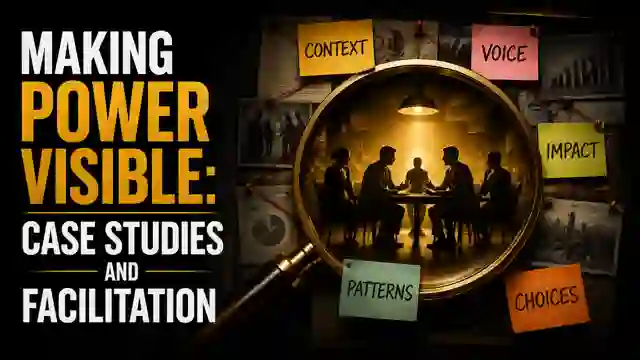
And I remember when I came into work with this team when I explained that there was different kinds of power and that they're being used in the room in this way without anyone being wrong about it, it was such a relief in this team. Oh, that's what we're seeing. Because the body of people who are quiet was sort of being pulled between one and the other and not sure what was happening, they couldn't give language to it. But power was at work. Power was present in the room being utilized and drawn upon in various ways, both formally in the role, but informally socially by status that made the interaction the field in which they're working very complicated.
Yeah, and you're making a visible by what you're doing. So that's partly what we want to do is put the dust on and people can see kind of a bit more clearly what's going on and understand it and therefore, yeah, be able to deal with it. Yes, I wanted to help make it visible. It's my role as a facilitator, but my knowledge of power and my experience of working with it helped give. language to do that.
Yeah, very, very, you know, very helpful. So I'm going to talk about, so what are we discuss next? Power paradox or leadership moments or what do you think? Yeah, let's go, let's go to, I think we have talked about the fact that the bleedish, the power is present within us and very visible between us and and and let's edit out this little bit of, of, who by what I'm just sort of thinking about that. Why does this matter?
Maybe we should go to that. Sure. This is a relatively short episode, but maybe a good episode too. Yeah, where I think this leads to Veney is, why is it matter? Why do we want to talk about these things?
Because every organization, every relationship is full of power. There's power dynamics and there's power flowing and through virtue of the interactions. And our charge, our responsibility, in fact, what you and I, and I are trying to do in this podcast and the podcast to come, is help people understand that power is being used and to use it more consciously in service of something worthy. And if you want to be someone who can utilize power in something worthy to some worthy and then please listen to these podcasts because we're going to share about how to use it because it's not straightforward. It requires skill and it requires depth and it requires a willingness to self reflect.
Because using it, you and I have sometimes said, it's like a power. like a chainsaw. It could do some terrible things or could do great things. So it's good to know if I've got a chainsaw and a while I'm going to rattle a little bit. You know it's going to hurt people if we're not using it consciously.
And it will also be used toward poor end. So we want these these episodes to be a journey where you the listener and viewer would start to love to notice how you're using power. Okay so I think the next thing that'd be good to introduce is something called the power paradox. Yes it's something that we're going to go much more into subsequent episodes. This provides an understanding with the critical question of what goes on when people attain positions of power, even people who seem well-intentioned, who seem...
to be good people, something goes a bit awry and there's also a phenomenon like the BMW phenomenon, you know people driving BMW seem to have less sensitivity to pedestrians. What is that? So, paraproducts unlock some of these things. So we're just going to headline it now. You can, yeah, it really does.
And the person who made this particular idea famous was Professor Ducker Keltner from Berkeley and after decades of research, he ultimately wrote a relatively small book that just in a really puffy way explained that when we get elevated in rank in one way or another by, you know, jumping in a BMW driving or even experimentally, he could help people prime them, he called them to feel powerful. By us, in order to think about people who were, for instance, way less well-off than they were and as a result, I started to feel powerful and with. they started to feel powerful. They started to behave in really weird ways and it was in fact biochemical. The more we start to feel above, the more we start to feel powerful by contrast and compare it to others.
We actually have less ability to read the emotions of others. We think that our judgment suddenly becomes more effective. We think we have greater control than we do over other circumstances. All sorts of strange things happen to us. But as Professor Keltoner makes clear, all of this can be outsmarted.
It doesn't have to be that way. But for many of us when we get elevated in power, we fall prey to the power paradox. And so we're going to spend time in the subsequent episodes looking at what it is and how to outsmart the power paradox because this is one of the reasons why we get so befuddled. looking at people in very senior roles, behaving so strangely. Often in organisations, they sometimes, well, we're working with a group that they're not the executive team that we below.
And I'll say, have you noticed that the people above you seem kind of weird? And then these are loves. And then I see nods everywhere, because it can make us a bit weird when we get senior really elevated. We start to find we don't read people well. We start to be awkward in conversations.
And we tend to see more of the world through our own lens. Unless you really can't smile at it. And so that's, that's, we're going to, so that's one of the things we're going to talk about. And we wanted to introduce that Veney in this first episode to say, power is a fascinating topic. And it's worthy of our consideration to get good at how to use it.
That's right. And you know, if you understand, What goes on, you understand the pitfalls, and then you can also do something different. You don't have to get weird, but it requires some consciousness, which is, I guess, the next thing that we want to talk about, which is being conscious about the use of power, using power for the good and using it skillfully, and there's a lot of things we're going to talk about in subsequent episodes to help you do that, to help you, to help you with knowledge and skills so that you can use power in ways which are effective and beneficial, and get people, well, not always get people on your side, but as much as possible, work alongside with the people who are under you. Yeah. Yeah, absolutely.
We're going to be helping you utilize power consciously and with heart. So you can do more than just power over, not all power over is bad, by the way, but you can power over, you can power with. you can power to, but you can do it skillfully and with heart. And in later episodes we'll be talking about the 150% principle. So we'll be talking about the extra responsibility you take for the health of this field, this interaction or space between us.
If you're the one with more rank than take more responsibility we'll talk about why that's so important and how to do it. We're going to talk about the role of anxiety that if you have persistent, unexamined anxiety, then you may more likely fall prey to the power paradox. So it's one of the requirements of utilizing power well is to live profoundly examined life. And if you do so you're more likely to to lead well using power beautifully. That self awareness is critical.
So these are the some of things that are coming in subsequent episodes. That's right. It's pretty exciting. Yeah. Fundamentally, it's not even a question of like, do I have power to a one power?
It's already, it's really a question of asking, where do I already have influence? Because everybody has some kind of influence in the life over someone or something, whether it be a formal situation or a informal situation. Yeah. Many people, many of us, the parents or my case grandparents. And, you know, we have a lot of influence over the people in our charge or the people who are dependent on us.
So this is really for everyone to understand, you know, how do we exert that? And also importantly, in terms of feedback, and we're going to be talking about this as well, how feedback works and understanding ourselves more fully. Because how can I be more aware of how other people experience me? You were just telling a story before about that, Paul. Perhaps that's...
still a straight up about the client you're just working with and the identity thing. Yeah, yeah. It was a notion we're just talking about it off air and I was working with a client who just was processing their feedback and by a 360 tool and noticed that the people who given their feedback really didn't see or as a people person but actually is gifted and strong around strategy, results, orientation and decisiveness and I was encouraging her to own the power that comes from being really gifted in those things rather than using it unconsciously. And never feeling like she was good enough because she was constantly feeling like she was filing it being a people person. Now, of course it's essential to build people skills but a real...
special source her real gifting was around occupying the space around strategy and for her then she can utilize the natural authority in power she has when it comes to seeing complex issues and knowing that way forward and this is going to help her use her power more effectively more consciously and this is the path we'd want to invite you in and listening to these podcasts. It's a continual process of gaining wisdom at high levels of complexity and this is an exciting journey. Van A and I are constantly reflecting on our own behavior and how we're using our power effectively and where we're stepping in it, where we're avoiding it and the effect we're having on others around us and so that's what I had and we I thank you for joining us. We really I hope you enjoy this journey because it's one we feel very passionate about and a convinced it can add enormous value to your growth and your journey. That's right.
That's right. We're doing this podcast partly because we're talking with each other, partly because we're fascinated by this subject. Also, though, because this is our way of being powerful by spreading the message and spreading the information, there's not a lot around really about power. There's not a lot of leadership courses discuss leadership, but they don't necessarily really talk about power specifically. So we want to come into what we see as a gap in the field and be able to contribute and be able to feel like we can use all our knowledge and experience a lot of experience between us, both in the personal development and therapy and interpersonal field that I come from and the organization or feel that you come from to be able to contribute and yes.
make a difference in the world. So this is also our excitement about blossoming and developing through this podcast ourselves and you as well. Yeah, this is our journey. This is our service to you and it's our intended contribution. We hope you can receive it.